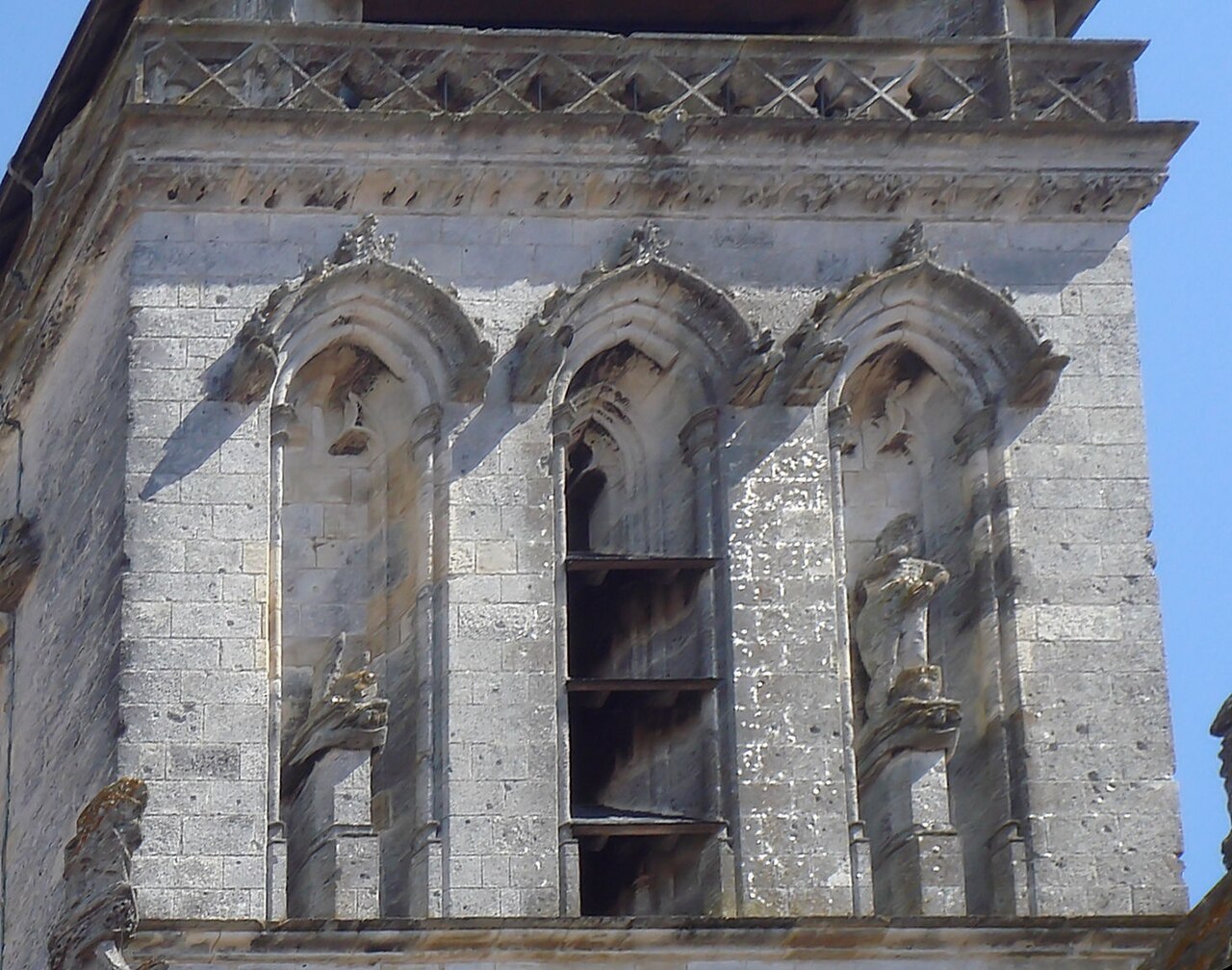
Frowardness is in his heart, he deviseth mischief continually; he soweth discord. —Proverbs 6:14
Latin Commentary
Pravo, &c. [Prov. 6:14 Hebr. תַּהְפֻּכוֹת בְּלִבּוֹ] Perversitates (non una, sed plurimæ; vel perversæ cogitationes, M.; ubique sunt, P. Pi. &c.) in corde ejus, P. Mo. Pi. &c.; omnimoda perversitate insidente animo suo, JT., atque cor adeo constipante, ut intumescat nec possit amplius continere, quin dictis perversis se exoneret, &c. Ab effectis ad causam assurgit, et ab externis gestibus ad interna animi opera. Habitum et consuetudinem hic depingit, sicut sequenti membro indefessum ejusdem exercitium.
Machinatur, [Hebr. חֹרֵשׁ רָע] Machinatur, sive fabricatur malum omni tempore, M. P. JT. Pi. Sy.; quo scilicet alteri damnum inferendo suis velificetur commodis. Docet otiosum sive impium non secus iniquitati addictum esse, quam colonus agrorum cultui, aut artifex operi perficiendo imminet; ([Hebr. חָרַשׁ etiam est “colonus/artifex”]); cum pii, contra, utcunque aratro peccati manum interdum apponant, tamen respectant, nec semen in agrum comportant ut hinc inde spargant, &c.
Jurgia, [Hebr. מְדָנִים יְשַׁלֵּחַ] Contentiones immittit, M. P. JT. Pi. &c.; vel spectandi libidine, vel in suum commodum.
Id facit susurris et detractionibus, dum hunc traducit, illum laudat; vel dum eundem eodem tempore verbis laudat, signis apud adversarium ipsius traducit. Post conatum internum sequitur externus effectus, rixarum excitatio, quæ ex otiosorum malignorumque garrulitate sponte solet emanare.
English Translation
“Frowardness, etc.” (Prov. 6:14) Perversities—not just one, but many; or perverse thoughts—are in his heart. His whole mind is possessed by every kind of corruption, so that his heart is so packed and swollen with it that it can no longer contain itself, but must discharge itself in perverse speech.
Here the text rises from effects to causes, and from outward behavior to the inward workings of the soul. It describes a settled habit and disposition, and in the next clause the tireless exercise of that same habit.
“He deviseth…” (Heb. “plows evil”) He continually devises or fabricates evil—namely, so that by harming another he may advance his own advantage.
This teaches that the idle or ungodly man is just as devoted to wickedness as a farmer is to cultivating his field or a craftsman to finishing his work. The godly, by contrast, even if they sometimes put their hand to the plow of sin, yet they draw back and do not carry seed into the field to scatter it abroad.
“He soweth discord” He sends out strife—whether for the pleasure of watching it, or for his own gain
He does this by whispering and slander: speaking ill of one, praising another—or even praising the same man to his face while secretly undermining him before his adversary.
After the inward attempt comes the outward effect: the stirring up of quarrels, which naturally flows from the talkativeness of idle and malicious men.
Extracted from Joseph Mede’s Discourse XXXVII. (Proverbs 4:23)
Keep thy heart with all diligence [Heb. מכל משמר, above all keeping:] For out of it are the issues of life. —Proverbs 4:23
EVERY way of man (saith the same mouth which uttered this) is right in his own eyes: but the Lord pondereth the hearts, Prov. 21:2, 16:2. All the ways of man are clean in his own eyes: but the Lord weigheth the spirits. Which words have this Discretive [marking distinction] sense, that Although the eyes of men judge of the rightness of the ways of men by that which appeareth to the eye: yet God he is not as man, nor judgeth like him; but he pondereth the heart and spirit. Therefore in Scripture he is styled A God that searcheth the heart and reins: Jer. 17:10. I the Lord search the heart, I trie the reins; even to give every man according to his ways, and according to the fruit of his doings. Which words our Saviour useth Rev. 2:23 in his Epistle to Thyatira, I am he which searcheth the reins and the hearts; and I will give unto every one of you according to your works: that is, Men esteem of works as they see; but I judge and reward them as I see. Men punish and reward according to the outside only, which comes under the view and stands in awe of men: but God judges and rewards according to the Heart or inward man, which he only sees, and which therefore stands in awe and fear of none but him. For as for the outward act, it may as well be done for the praise and awe of men, as for love and fear of God; and therefore by it cannot be discerned whether our obedience be to God or man: But the Heart is that divine Touch-stone, as that which hath none to fear, none to please, none to approve it self unto, but him who alone sees it and is only able to try and examine it,
If therefore any Precept, any Admonition in the whole Book of God deserve the best of our attention to hear, and greatest care to put in practice, this of my Text is worthy to be accounted of that number; Keep thy heart above all keeping: For out of it are the issues of life.
The words divide themselves into two parts; An Admonition, and A Motive. The Admonition, Keep thy heart above all keeping: The Motive, For out of it are the issues of life; that is, Even as in the life of nature, the Heart is the fountain of living, and the well-spring of all operations of life; so in the life of grace, we live to God through it.
In the Admonition consider 1. The Act, Keep: 2. The Object what we are to keep, our Heart: 3. The Manner and Means how it must be kept, with all diligence, or above all keeping.1
Of the Act Keep I shall not need say much; it is an easie word, and we shall not forget it in that which follows, but ever and anon have occasion to repeat it. Only here observe in general,2 That our Hearts are untrusty, unruly, and obvious to be surprised; for such things we are wont to keep: and so much therefore is implied, in that they are to be kept, else they needed no keeping. This is therefore the condition of our Hearts.
They are untrusty. The heart is deceitful above all things, Jer. 17:9. Therefore it stands in hand to watch it, to suspect it, and deal with it as we would with a notable Iugler [juggler/trickster] or with an untrusty and pilfering servant, to have a jealous and a watchful eye over it: For if our eye be never so little off, it will presently break out into some unlawful liberty or other.
It is an unruly thing; if it be once lost, a man cannot recover it again without much time and labour. For it is like unto a wild horse; if the bridle be once let go, he will be gone, and not gotten again in haste; yea it may be we shall be forced to spend as much time in recovering him, as would have served to have dispatched our whole journey: So if the bridle of watchfulness be once let go, and our Hearts get loose, they will not easily be regained; it will ask us no small time to temper and tune them again for the service of God.3
Lastly, our hearts are continually liable to surprise; we walk in the midst of snares, encompassed with dangers on every side. What is that almost which will not entice and allure so fickle a thing as the Heart from God? We can be secure of it at no time, neither sleeping nor waking; in no place, neither house nor street, neither bed nor board; not in our Closet, no not in the Church and Pulpit.
THUS much shall suffice to have been briefly observed by way of implication from the Act, Keep.
Now I come to the Object4 itself, The Heart, Keep thy Heart. By Heart we must understand the inward thoughts, motions and affections of the Soul and Spirit, whereof the Heart is the Chamber. But not a natural man’s Heart, for that is not worth a keeping; but such a Heart as lives to God-ward, a good and gracious heart, which consists in two properties, in Purity and Loyalty. This is the state and temper we must keep our Hearts in. I will speak of them in order.
And first of Purity and Cleanness: We must keep our Hearts in Purity and Cleanness5; For Blessed are the pure in Heart, for they shall see God, Matt. 5:8; and none but such shall ever see him. It behoves us therefore to know what this Cleanness is, the having or not having whereof concerns us so nearly. Know then, A clean or pure Heart is that which loaths sin, and loves righteousness. For the better understanding whereof, we must further know, That an absolute cleanness and pureness of the heart and soul from sin is not attainable in this life, Prov. 20:9. Who can say, I have made my heart clean, I am pure from my sin? Yet is there a cleanness of heart which must be had, and without which we shall never see God, as you heard before. Such was that which David prays for, Ps. 51:10. Create in me a clean heart, O God, and renew a right spirit within me. And 2 Tim. 2:22 true Christians are described to be such as call upon the Lord out of a pure heart. 1 Tim. 1:5. The end of the Commandment, saith the Apostle, is charity out of a pure heart, and of a good conscience, and of faith unfeigned. And himself 2 Tim. 1:3 thanks God whom he served from his forefathers with a pure conscience.
But if this Purity of the heart were no other than a total freedom thereof from all unclean thoughts and sinful motions and desires, in such sort as a man should never be troubled and defiled with them; alas! who then should see God? who should be saved? That Cleanness therefore, that measure of Purity which God requires to be in the heart of every one who shall see him, and with whom he will vouchsafe to dwell, is (as I told you) the loathing of sin, and the love of righteousness: that is an accepted Cleanness through Faith, when the hate of impurity and love of cleanness in the heart is accepted with God for cleanness and pureness it self. Though not a cleanness of all our affections, yet at least (and what can God require less?) an affection to all cleanness: For God accepts the will for the deed. If we love, if we desire, if we delight heartily in that which is clean and pure in the eyes of God; if we hate and abhor, if we loath in our selves all sinful impurities and pollutions both of flesh and spirit; howsoever we find in our selves a great want of the one, and our hearts much and often vexed and troubled with the other; yet is this affection of our hearts accepted with God for a pure and cleansed heart indeed. And where this disposition is, the heart cannot chuse but grow cleaner and cleaner, even with real and formal cleanness. For a man cannot but cherish that which he loveth, and rid himself as much as may be of what he loatheth. So he that loveth and affecteth cleanness of heart, will cherish and make much of every good motion which the Spirit of God shall put into it; and if he indeed loath and abhor unclean and sinful thoughts, will do his best to stifle them and remove them far from him.
This Cleanness and Purity of Heart is that which the Scripture styleth Holiness, even that Holiness without which, S. Paul tells us, Heb. 12:14, no man shall see the Lord. For in the Law, the legal cleansing, washing and purging of that which any way belonged to God or was prepared for his presence and service, is called sanctifying or hallowing, Exod. 19:10. When the Lord was to come down upon Mount Sinai, Go unto the People, (saith he to Moses) and sanctifie them to day and to morrow, and let them wash their clothes. 2 Chron. 29:5. Hezekiah saith to the Levites, Sanctifie now your selves, and sanctifie the house of the Lord God of your fathers, and carry forth the filthiness out of the holy place. And accordingly in the 16 verse the Priests go in to cleanse it; which cleansing in the next verse is called their sanctifying it. In Deut. 23:14, where a law is given for cleanness and neatness in the Camp, the reason is rendred in these words, For the Lord thy God walketh in the midst of the Camp, to deliver thee, and to give up thine enemies before thee: therefore shall thy Camp be holy, that he see no unclean thing in thee, and turn away from thee. The same expression S. Paul applies to spiritual cleansing, 2 Cor. 7:1. Let us (saith he) cleanse our selves from all filthiness of the flesh and spirit, perfecting holiness in the fear of God. Here, with S. Paul also, Holiness is Cleansing, and Cleansing is Holiness. So Eph. 5:26. That he might sanctifie and cleanse it, &c.
As therefore under the Law that place was not fit to entertain the presence of God, nor any thing duly prepared to approach or come near him, which was not thus externally cleansed and sanctified: Such is the case of the inward cleansing of the heart; unless it be sanctified with purity and cleanness, God will never dwell in it, nor suffer ought from it as acceptable to come near him. Wherefore it is not without good reason we pray in our Liturgie, O Lord, make clean our hearts within us; And take not thy holy Spirit from us: For God’s Spirit will not dwell in a sty; it is a clean Spirit, and will have a clean habitation. That which S. Paul speaks of the whole man, 2 Cor. 6:16–17, Ye are the Temple of the living God, wherefore touch no unclean thing, and I will receive you, is principally true of the heart and spirit. The rest of the Body is but as the Court of the Temple; but the Seat of his presence in the spiritual man, as the Holy place, is the Heart: even as it is also the Seat of life in the natural; primum vivens et ultimum moriens, the first that lives and the last that dies.
But by what means should a man get and keep such a Heart as this? How is this Holiness and Cleanness of heart to be come by? I answer, The General means on our part to obtain this and all other Graces of God is faithful and devout Prayer; But this being common to all Graces, is not proper to be spoken of in this place. Let us therefore see a means more special and peculiar for obtaining this Cleanness and Purity of heart; such a one as though it may have some use for other Graces, yet I think is more proper unto this than unto any other whatsoever; and that is, For a man always to possess his heart with the apprehension of God’s presence, and to walk before him as in his eye. Wheresoever thou art, there is an Eye that sees thee, an Ear that hears thee, and a Hand that registreth thy most secret thoughts: For the ways of man (saith Solomon, Prov. 5:21) are before the eyes of the Lord, and he pondereth all his goings. How much ashamed would we be that any one we loved and honoured should surprise us in our corporal uncleanness, to see and behold any nasty pollution either of our bodies or chambers? How would a man blush and be confounded to be taken and seen6 in the manner, as we speak? But every unclean thought, wicked desire and motion of our heart, is more open and revealed to the eyes of God than the works themselves, if we should put them in execution, could be visible to the eyes of men. Yea and these thoughts and desires wherewith our hearts are besmeared are as foul, ugly and loathsome in his sight, as the works themselves would appear shameful in the eyes of men, if we should commit them openly in the street and in the sight of the Sun. Nay suppose that men could see our hearts as well as they may our out-works would we not be as much ashamed they should behold the foulness of the one, as see the shamefulness of the other? Consider it; What if such a Patron, such a Friend, such a one to whom I desire to approve my self, should know what I now ruminate in my heart; what unchaste pollution, what other abhorred desire and thought it now wallows and delights in? should I not blush and be ashamed?
What horrible Atheism doth this argue, That the presence of man, yea sometimes of a little child, should hinder us from that wickedness which God’s presence cannot? If we did throughly and indeed believe this Ubiquity of God’s Eye, and let it make a firm impression in our minds, how would it quash the first rising of evil thoughts in our hearts? The eye of man draws from us a care of our outward behaviour; why then should not the All-seeing Eye of God, if we loved him, if we honoured him, if we desired at all to approve our selves unto him, draw from us a care of the inward behaviour of the Heart? since he sees thy Heart better than man sees thy Face, and understands thy Thoughts better than any man thy Works and Words. Little children when in the midst of their disorders they spie once their Father’s eye, they are hushed presently: So should it be with us, when, through forgetfulness of this All-seeing Eye of our Heavenly Father continually overlooking us, our Hearts begin to break loose and to sport themselves in vain and idle thoughts and desires, then should we consider that all this while God looked upon us and beheld our misbehaviour; then should we cry him mercy with Jacob at Bethel7, Surely God was here, and I was not aware.
And thus I come to the second requisite of that gracious Temper a good Heart must be kept unto, which is Loyalty unto God; We must keep a loyal heart. The Loyalty of the heart to God consisteth in an universal purpose of obedience, and resolution against all sin, without Reservation and Exception. Sceptra non ferunt socium; Kings can endure no copartners. Nor can a purpose of obedience mingled with Exceptions and Reservations stand with a true faith and allegiance to Christ our Lord. In anima in qua peccatum regnaverit, non potest Dei regnare regnum, saith S. Jerome; In the Soul where sin reigns and has got dominion, God’s Kingdom can never be set up nor established. For how can he be a faithful servant of Christ, who still holdeth correspondence with, and is a Pensioner to, his Arch-enemy the Devil? Even such an one is he who hath any sin which he holds so dear, that he hath no purpose nor will to part with it. What will it profit thee to keep thy Heart at all, unless thou keepest it loyal? Will God accept a piece of thy Heart? No, he will have a whole Heart and a whole Soul, or none. Thou shalt love the Lord thy God with thy whole heart, and whole mind, Matt. 22:37. otherwise thou keepest not thy heart to God, but betrayest it unto the Devil. For one breach in the walls of a City exposeth it to the surprise of an enemy; one leak in a Ship neglected will sink it at last unto the bottom of the Sea.
If thou wilt therefore have a Loyal heart, know that such a heart cherisheth no darling sin, no Herodias, no bosom-sin; such a dead fly as this will mar the whole box of oyntment, Eccles. 10:1.
A Sound and Loyal heart is not that which boggles and scruples at small sins, but makes no conscience of greater, like the Pharisees straining at a Gnat, and swallowing a Camel, Matt. 23:24. nor the contrary, whose conscience is only for the greater matters of the Law, Mercy and Judgment, without any regard of Mint or Anise, Matt. 23:23. A Loyal heart is like unto the Eye troubled with the least mote, Matt. 7:3.
A Loyal heart as it hates all sins, so at all times. Sometimes the unsound heart will hate sin, when there is no benefit by it; but if it chance to be once beneficial to our selves, then we love it. Here is the trial of a Loyal heart to God, to prefer virtue before vice then, when in humane reason virtue shall be the loser, vice the gainer. This note discovered Jehu, who destroyed the worship of Baal with a great shew of zeal, 2 Kings 10:28. but when it came to Jeroboam’s Calves, he dispensed with them, lest it might prove dangerous to his Kingdom, if the Israelites should go worship at Jerusalem, 2 Kings 10:29.
To conclude; A Loyal heart is that which the Scripture calls in the old Testament A perfect heart, לֵב שָׁלֵם, or לֵבָב שָׁלֵם. Not perfect in respect of degrees, for such a perfection is not attainable in this life; but perfect in respect of parts; Cor integrum, a heart wherein no part is wholly wanting, howsoever weak and a great deal short of due proportion. When Solomon was old, his wives turned away his heart after other Gods, and his heart was not perfect with his God, as was the Heart of David his Father, 1 Kings 11:4. not because he served not the Lord at all, but that he served him not only and entirely. Now therefore, saith Joshua, fear the Lord, and serve him in sincerity and truth (Heb. בְּתָמִים וּבֶאֱמֶת, in perfectness and truth) and put away the Gods which your Fathers served, Josh. 24:14. which was as much as to say, Serve the Lord wholly, and quite renounce all service to others. Hezekiah prayes in his sickness, Lord, I have walked before thee in truth, and with a perfect heart, and have done that which is good in thy sight, 2 Kings 20:3. He saith not, he had done perfect Actions, or performed perfect service (for who can do such?) but yet that he walked with a perfect heart, that is, with a loyal heart before God. So it is said, That though Asa failed in his Reformation, and the high places were not removed; nevertheless his heart was perfect (that is, loyal) with the Lord all his dayes, 1 Kings 15:14.
THUS much shall suffice to have spoken of the Act, Keep; and of the Heart, the Object of our keeping: which are the two first things I considered in this Admonition.
The Third remains, which is the Manner or Means how our heart is to be kept, viz. with all diligence, or above all keeping saith the Text, Prov. 4:23. that is, with the best, the surest, the chiefest kind of keeping; which is not only now and then to look unto it, but to set a continual guard about it. Nature hath placed the Heart in the most fenced part of the body, having the Breast as a natural Corslet to defend it. If the Heart be in fear or danger, all the blood and spirits in the body will forsake the outward parts, and run to preserve and succour it. If Nature be so provident for that which is but the Fountain of a natural life, what care should the spiritual man have to keep his heart and soul guarded and fortified against all annoyances spiritual? The life we lose, if this be wounded or poisoned, is inestimable; the other of Nature is of no great value.
Yea but perhaps a natural man’s heart is liable to more natural dangers than the heart of a man that lives to God-ward is to spiritual annoyances. I answer, The contrary is true: For the Heart we speak of, whence the Issues of the life of grace proceed, is like a City every moment liable both to inward commotion and outward assault: Within, the fountain of original Impurity is continually more or less bubbling with rebellion; Without, the World and the Devil continually either assault it, or lye in Ambuscado [ambush] to surprise it. The world batters it with three great and dangerous Engines, of Pleasures, Riches, and Honours, wherewith she endeavoureth to lay it waste, and rob it of all heavenly treasure. The Devil watcheth every opportunity to hurl in his fiery darts, to cast all into a combustion, and thereby farther to invenom and enrage the already-too-much impoisoned viciousness and impetuousness of our corrupt nature. How needful a thing is it therefore to follow this precept of Solomon, to keep our hearts with all diligence, or above all keeping; to keep them with a continual guard, to keep a continual watch and ward, lest the enemies surprise them? Watch and pray (saith our Saviour) that ye enter not into temptation, Matt. 26:41. Watch in all things, saith S. Paul to Timothy, 2 Tim. 4:5. Be sober, be vigilant (saith S. Peter) because your adversary the devil as a roaring lion walketh about, seeking whom he may devour, 1 Pet. 5:8. If the heart be to be kept with all diligence, or above the keeping of any thing else, then is this Watch we hear commanded, and this Guard of Prayer (and this is a strong Guard) to be chiefly and above all applied unto it.
But for a more particular direction of this guarding of the Heart, we must be careful to observe this order following.
As those who keep a City attempted or besieged by an Enemy have special care of the Gates and Posterns whereat the Enemy may get in: So must we in this Guard of the Heart watch especially over the Gates and Windows of the Soul, the Senses; and above all the Eye and the Ear, whereat the Devil is wont to convey the most of those pollutions wherewith the Heart is wasted. First, concerning the Eye, David’s example may warn the holiest men to the world’s end to keep a watchful jealousie over it. What a number of Cut-throats did one idle glance upon Bathsheba let in, who made that Royal Heart, whose uprightness God so much approved, to become a sty of uncleanness, and robbed it of those heavenly ornaments wherewith it was so plentifully adorned? 2 Sam. 11:2–4. For the Ear, take heed of obscene and wanton talk, which by those Doors or Windows entring like Balls of Wild-fire, inflame the Heart with lust. We must beware also of the slanderer’s mouth and backbiters tongue, whose lying reports and malicious tales, if they get in, would sow in thine heart the seeds of heart-burning spight and mental murther, which in that sinful soil will fructifie very rankly. And think them no small sins which make thee guilty of innocent bloud; for thine heart and tongue may kill thy brother as well as thy hand, 1 John 3:15.
As those who keep and defend a City make much of such as are faithful, trusty and serviceable; and if any such come, will entertain and welcome them with much kindness; but a Traitor, or one of the enemy’s party, they presently cut short as soon as they discover him: So must we make exceedingly much of all good motions put into our hearts by God’s Spirit, howsoever occasioned, whether by the Word of God, mindfulness of death, good Admonition, some special cross or extraordinary mercy, any way at any time: These are our Hearts friends; we must cherish, encrease and improve them to the utmost with meditation, prayer and practice. But, on the contrary, we must resist and crush every exorbitant thought which draws to sin at the first rising. Tutissimum est, It is most safe (saith S. Austin, Epist. 142.) for the Soul to accustom it self to discern of its thoughts; & ad primum animi motum, vel probare, vel reprobare, quid cogitat; ut vel bonas cogitationes alat, vel statim extinguat malas; and at the first motion thereof either to approve or else to disallow what the Mind is thinking of; and so either to cherish and improve the thoughts and motions of the Mind if good, or presently to extinguish them if evil.
Lastly, Let him that will indeed guard his Heart as it should be, take heed of familiar and friendly converse with lewd, prophane and ungracious company. There is a strange attraction in ill company to poison and pervert even the best dispositions. He that toucheth pitch (saith the Son of Sirach) shall be defiled therewith, Ecclus. 13:1. Can a man take fire in his bosom (saith Solomon) and his clothes not be burnt? Prov. 6:27. For believe it, when a man is accustomed once and wonted to behold lewd and ungodly behaviour, there steals upon him insensibly, first, a dislike of sober courses; next, a pleasing approbation of the contrary; and so presently, an habitual change of affections and demeanour into the manners and conditions of our companions. It is a point that many will not believe, but few or none did ever try but to their cost. It was wise counsel, had it not been in a sinful business, which Ieroboam advised; If this people (saith he) go up to sacrifice at Ierusalem, then shall the heart of this people turn again to their lord, even to Rehoboam king of Judah, and they shall kill me, and go again to Rehoboam king of Judah, 1 Kings 12:27. O that some men would be as wise for their good as he was for his sin!
THUS I have done with the first part of my Text, The Admonition, Keep thy heart with all diligence, or above all keeping: Now I proceed to the Motive, For out of it are the issues of life; that is, All spiritual life and living actions issue from thence, Prov. 4:23. All living devotion, all living service and worship of God issues from the Heart, from those cleansed and loyal affections and dispositions of the Soul and inward man whereof I spake before. Where such a Heart is not the Fountain, there no action God-ward liveth, but is spiritually dead, how gay and glorious soever it may outwardly seem. No outward performance whatsoever, be it never so conformable and like unto a godly man’s action, yet if it be not rooted in the Heart inwardly sanctified, it is no issue of spiritual life, nor acceptable with God. Even as Statues and Puppets do move their eyes, their hands, their feet, like unto living men; yet are they not living actions, because they come not from an inward Soul, the fountain of life, but from the artificial poise of weights and device of wheels set by the workman: So is it here with heartless actions; they are like the actions of true Christians, but not Christian actions; because they issue not from a Heart sanctified with purity and loyalty in the presence of God who tries the heart and reins, Jer. 17:10. but from the poise of vain-glory, from the wheels of some external respects and advantages, from a rotten heart which wrought not for the love of God but for the praise of men, Matt. 6:1. As therefore we judge of the state of natural life by the Pulse and beating of the Heart; so must we do of spiritual. No member of the body performs any action of natural life, wherein a Pulse derived from the Heart beats not: So is it in the spiritual man and the actions of Grace; That lives not, which some gracious and affectionate influence from the Heart quickens not.
Now this Issuing of our works and actions from the Heart is that which is called Sincerity and Truth, so much commended unto us in Scripture: For this Sincerity and Truth which is said to be in the works and actions of all such as fear and serve the Lord with acceptance, is nothing else but an agreement of the outward work seen of men with the inward and suitable affection and meaning of the heart, which God and our selves alone are privie to. For as our words and speeches have truth in them when we speak as we think; so our works and actions are done in sincerity and truth, when they are done according to our heart’s affection. Sincerity therefore and Truth is the life of all our works of devotion and obedience unto God; without this they are nothing but a carkase; they are dead, they live not, neither doth God accept them: For he desireth truth in the inward parts, Ps. 51:6. that is, truth which proceedeth or issueth from the inward parts. The Lord is nigh unto all them that call upon him, that call upon him in truth, Ps. 145:18. For God is a Spirit, and they that worship him must worship him in spirit and in truth, John 4:24. Whatsoever ye do (saith S. Paul) do it heartily, as to the Lord, and not unto men, Col. 3:23. Our faith must be unfeigned, 1 Tim. 1:5. that is, in truth and in sincerity. Also our Love must not be in speech and tongue only, but in deed and truth, 1 John 3:18.
And this is the highest Perfection attainable in this life, for which God accepteth of our obedience as perfect which springeth from it, though it be stained with much corruption and full of imperfection: That which is wanting in the measure of obedience and holiness, is made up in the truth and sincerity thereof. If it have not this, whatsoever it be, it is good for nothing, because it wants the Issue of life.
And such Actions are all the Actions of Hypocrites: For Hypocrisie is the contrary to Sincerity; and wheresoever Sincerity and Truth is not, there Hypocrisie is, being nothing else but a counterfeiting and falsehood of our actions, when they come not from a Heart suitably affected: and therefore is otherwise in Scripture understood by the name of Guile; when those who serve God in sincerity and truth, are said to be without guile, that is, without hypocrisie. So Nathanael is called an Israelite indeed, in whom there was no guile, John 1:47. And of the Virgin-Saints it is said, that in their mouth was found no guile; for they are without fault before the Throne of God, Rev. 14:5. that is, they served God without hypocrisie, in sincerity and truth; and therefore God accepted of their obedience as if it were without fault and imperfection; as he is wont to do the works of those who serve him in that manner. If therefore Sincerity be the life of our obedience, and that which makes it graceful in the eyes of God; then is Hypocrisie the death thereof, which makes him loath and abhor it as a stinking carkase.
Hitherto have I spoken of the Influence of life into a Christian’s actions in general. But as in natural life, so in spiritual, are many Branches, as the words of my Text imply; speaking not singularly of one Issue, but plurally of many Issues of life, Prov. 4:23. For that which lives, exerciseth many living acts, as so many streams flowing from the Fountain of life; none of which belong unto that which liveth not. These Issues in Nature are five; Health, Nourishment, Growth, Sense, and Motion: and the Heart is the Fountain of them all; without it they are not, they cannot be; but as it fareth, so fare they all. The like unto these are to be found in our spiritual life, of which I will speak somewhat in special, the rather because every of them are as so many Motives to incite us to the attainment of this life to God-ward, by serving him in Sincerity and Truth.
The first Issue of Spiritual life, flowing from the Heart, is spiritual Health. For the curing of our Souls of their Spiritual diseases must begin at the Hearts, and the inward causes of corruption must thence be purged, before there can be any true Reformation or sound Health in the outward parts: Even as the heat of the Face is not much abated by casting water and cooling things upon it, but by allaying inwardly the heat of the Liver. Again, That which seems to spring and flourish in our lives, unless it be rooted in the Heart, will wither and die. The Fig-tree that only made a shew with leaves, having no fruit; in the end, being cursed, lost the leaves too wherewith it deceived our Saviour, Matt. 21:19. So the Seed which sprouted upon the stony ground is said to have withered, because it had no root, Matt. 13:6. And if an Apple seem never so beautiful, yet if it be rotten at the core, it will quickly putrifie.
The second Issue of spiritual life is spiritual Nutrition, whereby the Soul continually feeds upon Christ in his Word and Sacraments. But this is in none whose works and actions issue not from the Heart by Sincerity and Truth. For where Hunger and Thirst is not, the body is not nourished: He must have a stomach to his meat that will have good by it: Chewing in his mouth will not do it, though he swallow it; if his stomach be against it, he will vomit it up again. And can this spiritual hunger and spiritual thirst be where the inward man is not sanctified? Blessed are they which do hunger and thirst after righteousness, Matt. 5:6. Can he have a Spiritual stomach whose heart is not cleansed?
The third Issue of Spiritual life is spiritual Growth. It is God’s wont to reward the sincerity of a little grace with abundance of great graces. Nathanael, a man of no great knowledge, yet being a true Israelite, void of guile, is further enlightened by our Saviour, who gives him a sight of the true Messiah, endues him with true faith, and promises him still greater matters, John 1:47–50. A weak and dim knowledge had the Eunuch and Cornelius in the Mystery of Godliness: yet because they worshipped God sincerely, an Evangelist was sent to the one, Acts 8:26–35. and an Angel and an Apostle to the other, Acts 10:3–6, 34–44. to give them clearer light of the Gospel and a fuller largess of spiritual gifts. The curse of God is upon Hypocrisie, to destroy a great deal, a great stock of grace; but his blessing is upon Sincerity, to improve a little portion to a greater measure. A little Spring is better than a great Pond; for in Summer, when Ponds are dried up, little Springs will still hold out.
The fourth Issue of Spiritual life is spiritual Sense, the Sense and feeling of the favour of God: This no man shall ever find who lives not the life of sincerity. For this is the most sound and undeceivable evidence of our portion and interest in the power and purity of Christ’s saving passion and sanctifying bloudshed. The Spirit itself beareth witness with our spirit, that we are the children of God, Rom. 8:16.
The fifth Issue of Spiritual life is spiritual Motion; such I call Alacrity and Courage. Sincerity is the cause of these: It makes us chearful in all duties of service and obedience unto God; it makes us valiant and courageous in all dangers, trials and temptations; begetting in us a true, manly, generous and heroical spirit. The wicked flee when no man pursueth: but the righteous are bold as a Lion, Prov. 28:1.
Heinrich Bullinger, Decades, 4th Decade, 10th Sermon, “Of The Reasonable Soul Of Man; And Of His Most Certain Salvation After The Death Of His Body.”
Up to here I have treated the soul of man as yet joined to the body. In this discourse, the wonderful goodness of God appears, the most bountiful Creator of the soul, indeed, Creator of the whole man. Whatever praise is given to the soul, we worthily account it received from his grace. Now I will speak of the soul separated from the body.
Immortality of Soul
The soul, being separated from the body, does not cease to be what it was; but the body being dead, the soul abides alive in its own essence, altogether immortal, and void of all corruption. For the death of man is not the extinguishing or destruction of the soul, but only a separation or departure from the body. If you take a candle out of a lantern, you have taken the light from the lantern, but you have not put out the candle. Truly, because the candle is taken away, the lantern remains full of darkness; but the candle feels so little hurt by removing it, that being taken away from the lantern, it then shines more clearly, and casts forth the beams of its light more at large. So truly, being separated from its earthly or slimy body, the soul feels so little discommodity, that being delivered from the trouble and burden of the body, it lives more at liberty, and works more effectually. But the common sort do not understand this.
They see the body only among the dead, robbed of the soul; and because this lacks all feeling and moving, yes, and it rots away, they think that the whole man perishes. Nor is the world without some shameless and ungodly wretches who have in their mouth, that no man ever returned from death or from below, who by his return proved that the souls remain alive when the body is dead. But they lie maliciously, dissembling that they do not know what certainly they know. For who does not know that Christ the Son of God died, and was buried, and the third day was raised again from the dead, the very self-same soul returning into his body, and which gave his body life and ruled it before death? Who does not know that Christ ascended into heaven with his true body and with his reasonable and natural soul, and sits at the right hand of the Father, that laying down a most assured pledge as it were, he might testify to the whole world that both our own proper souls and our own proper bodies will one day be translated there? Who does not know that as many were dead, being raised from death to life, did not receive new souls, but their old souls? This would not have come to pass if the souls of men were extinguished by the death of the body.
Death of the Soul in Scripture, in what Manner?
They object that the scripture itself mentions the death of the soul. I no less confess that indeed. For the soul of man is both mortal and immortal, in a certain manner of its own. For the soul is not in all ways immortal as God is, of whom it is said that only he has immortality (1 Tim 1:17). And truly, the death of the soul in the holy scripture is to be remembered; but it refers to the state and condition, not to the substance, of the soul. For if God is the life of the soul, then surely the death of the soul is to be forsaken by God, and to be left to yourself. But nevertheless, the reasonable soul lives in its proper essence or being, so that, when it lives miserably, a miserable life is indeed called death (1 John 3:14). But desperation also is the very death of the soul; for we live by hope. And Paul says, I live, yet not I, but Christ lives in me; and the life which I now live in the flesh, I live by the faith of the Son of God (Gal. 2:20). Therefore they that are destitute of faith are dead, and they that have faith live.
St. Augustine says, cap. 10, De Fide et Symbolo: “The soul, just as it may be called corruptible because of sin and wickedness, so it may be called mortal. For the death of the soul is revolting or falling from God; this was the first sin of the soul, committed in paradise, as declared in the holy scriptures.” And Augustine again says, Lib. de Trinitate, 14, cap. 4: “The soul also has its death when it lacks a blessed life, which should be called the true life of the soul. But it is called immortal for this reason: for whatever life it lives — yes, even though it is most miserable — it never ceases to live.”
We therefore freely confess that the souls of men, separated or taken out of their bodies, do not die, but live immortal forever — the faithful in everlasting joy and felicity, but the unbelievers in eternal damnation.
Immortality of the Soul Proven from Scripture
I will now go on to confirm this by some substantial testimonies of scripture. But first, take this with you: that testimonies of scripture in this case are far more lively than man’s reasons framed out of philosophy. For these testimonies are fetched from the very mouth of the living God himself, who preserves us in life; who (since he is true) cannot lie, and who (since he gives life and is life itself) is most certainly able to testify of life, above all others. Nor is it doubtful that the Spirit of God works jointly with the word of God; once the hearts of men are touched by Him, the reasons of philosophy, however manifest they may be, will not at all prevail, especially in danger of death and other temptations. Therefore, those who are not ashamed to say that they cannot be persuaded or brought to believe the immortality of souls, by the scriptures alone, are fleshly and altogether brutish. Indeed! And what is more, they will never be steadfast and stable in temptations, which proceed from flesh and blood. We will therefore add some certain testimonies, and those too are most manifest.
David, the most powerful and happiest king in the world, comprising in one verse both the immortality of souls and the resurrection of bodies, says this: You, O Lord, shall not leave my soul in hell: nor shall you allow your Holy one to see corruption (Ps. 16:10). Man consists of body and soul. The body rots away when it is dead, and is turned into dust; but it will not therefore perish. For as the body of Christ which was buried did not rot, but rose again the third day, so our bodies shall be raised up in the day of judgment, and be delivered by Christ from corruption. And our soul does not go into hell to remain there. But as the soul of Christ returned from the nether parts to his body, and ascended into heaven in his body which he had taken up again; even so, our souls shall also live by Christ — they shall not die (Eph 4:9-10).
Solomon, the son of David, excelling all kings and mortal men in wisdom, likewise expounds in one verse upon the providence of God touching the soul and the body. He says: The dust shall be turned again to earth, from whence it came; and the spirit shall return to God, who gave it (Eccles. 12:7). Solomon calls man’s body dust, because it is said in Moses that God made it of the dust of the earth. Therefore, the body returns again to dust; for it putrefies and is resolved into what it first was, even until the judgment-day. As the Lord says: For dust you are, and into dust you shall be returned again. (Gen 3:19). But the spirit, that is to say, the reasonable soul, does not die with the body. It is not resolved into dust, because it is not taken out of the dust; nor is it scattered into the air, because it does not consist of air; but it returns alive from death, to God. And therefore it returns to God, because God gave the soul, and in a singular way, made man in His own likeness and image, breathing into his face the spirit of life — of life I say; that is, of living power, not the spirit of death. Therefore, the soul cannot perish, because it receives immortality from God who, since he is life, is able to preserve that breath of life which he has made.
The Lord Jesus, the true and very Son of God, the life and resurrection of the faithful, says plainly in the gospel: Do not fear those who kill the body, but are not able to kill the soul; rather, fear Him who is able to destroy both body and soul in hell (Matt. 10:28).
If the soul is not killed when the body is slain by tyrants, then it remains alive after the body is destroyed. And so it assuredly remains, so that, having put off the body, it would be cast into hell by the most just God, to burn there everlastingly for its unfaithfulness. For in the same gospel, the Lord says again, Whoever would save his life shall lose it. Again, whoever would lose his life for my sake, shall find it (Matt. 16:25). For not only is it the one who bridles himself from the pleasures of the world, and lives most temperately, that loses his life or soul; but also the one who offers himself into the bloody hands of tyrants to be slain for the confession of his Christian faith. But then he finds his life or soul which he lost. Therefore, the souls of men, even after the death of the body, remain alive and immortal.
In the gospel of St. John, the Lord says, Truly, truly, I say to you, He that hears my word, and believes on him that sent me, has everlasting life, and shall not come into judgment; but has escaped from death unto life (John 5:24). You have in these words of the Lord, the death of the body. But immediately afterward he witnesses that we escape unto life. Therefore, men’s souls remain alive after death. For he says nothing of the raising again or of the salvation of the body, but of the life of the soul after death. In the same gospel, the Lord says again: Truly, truly, I say to you, If a man keeps my word, he shall never see death (John 8:51). But it is evident that all men are ordained once to die (Heb. 9:27), namely, with bodily death. Therefore, the soul lives after the death of the body. For it must be that a faithful man will never see or feel death, unless he told a lie, affirming what he said with an oath. For in every other place, he adds an oath, saying, Truly, I say to you, so that we should not doubt the immortality of souls. There are very many testimonies, and those of Christ the Son of God in the same gospel, are most evident — as in the sixth and eleventh chapters. To these we will join one or two out of the writings of the blessed apostles of Christ.
St. Peter, speaking of the souls of the fathers which were dead a great while ago, says that, the gospel was preached also to the dead, that they should be judged like other men in the flesh, but should live before God in the spirit (1 Pet. 4:6). Spirits are souls of the blessed fathers whose bodies, buried a great while ago, wait for the universal sentence of that general and last judgment — that is, their flesh may be raised up again and judged with other men in the last day; but meanwhile, their souls live with God. Thus men’s souls are alive, even though their bodies were rotten a great while ago.
In his epistle to Timothy, St. Paul says that life and immortality are made manifest and brought by Christ (2 Tim. 1:1, 10). Everywhere, Paul so plainly avouches the immortality of souls, that one must be blind not to see it.
St. John, the apostle and evangelist, saw under the altar in heaven (that is, under the protection of Christ who is the sacrifice and propitiation for the sins of the world) living souls lying there and crying: “How long will you wait, Lord, to revenge our blood?” (Rev. 6:9-10). He saw them clothed with white garments, and enjoying everlasting rest. But these souls were the souls of the martyrs of Christ, whose bodies died, having been murdered on the earth under tyrants and persecutors of the Christian faith. Therefore, the souls of men are immortal.
Therefore, — yes, and undoubted — those words are most true which are written in the book of Wisdom, uttered in this way:
The souls of the righteous are in the hand of God, and no torment shall touch them there. In the sight of the unwise they appeared to die, and their end is taken as a misery, and their departing from us considered utter destruction; but they are at rest. For though they suffer pain before men, yet their hope of immortality is full. They are punished but in few things; nevertheless, they shall be well-rewarded in many things. For God approves them, and finds them fit for himself. He tries them as gold in the furnace, and receives them as a burnt-offering; and when the time comes, they will be looked at. They will shine and run through, like sparkles among the stubble. They will judge the nations, and have dominion over the people, and their Lord shall reign forever. —Wis. 3:1-8
Thus most truly, according to the canonical scripture, the ecclesiastical definitions pronounce this, cap. 16: “We believe that man alone has a substantial soul which, having put off the body, lives and keeps his senses and disposition living. It does not die with the body, as Aratus affirms; nor die a short while later, as Zenon says, because it lives substantially. But the souls of beasts and other mortal creatures are not substantial, but are born with their flesh through the life of their flesh, and with the death of their flesh, they are at an end and die.” (August, de Eccles. Dogm. 16. Opp. Tom. iii. fol. 42. col. 4. Par. 1532. – drawn from Eccles. 3:21).
Immortality of the Soul Proven from Natural Law
Furthermore, that truth touching the immortality of souls, by the law of nature as it were, is written and imprinted in the minds of all men. Thus it is no marvel that all the wise men among the Gentiles could never abide that the soul should be called mortal. For the consent of all (especially the chief ones), which is thought to be the voice of nature, declares that souls are immortal. And M. Tully also affirms it, saying: “As by nature we think there are gods, and by reason we know what they are, so we hold the opinion with the consent of all nations, that souls still continue.” All the ancient writers, therefore, and all that followed them, have said that souls are everlasting or immortal — such as Trismegistus, Museus, Orpheus, Homerus, Pindarus, and Pherecydes the Syrian, the master of Pythagoras, and his scholar Socrates. Plato himself, who sailed into Italy to learn the opinions of Pythagoras, was not only of the same opinion as Pythagoras, touching the immortality of souls, but also brought reasons to confirm it. These reasons, as Tully witnesses, are so many that, someone who reads his book could seemingly not desire anything further. Seneca so plainly affirms and proves the immortality of souls, that nothing can be more plain.
And Epictetus, a famous philosopher, who lived in the time of Seneca, has done no less. If there are still any light-headed men to whom the immortality of the soul seems doubtful, or who utterly deny it, these truly are unworthy to be called men; for they are plagues of the commonwealth, and very beasts, worthy to be hissed and driven out of the company of men. For he lacks a bridle to restrain himself, and has cast away all honesty and shame. Whoever believes the soul of man is mortal, is in all points prepared to commit any mischief.
I showed that souls being separated by death from their bodies, do not die, but remain alive. It now remains that I teach you where souls lead their life and are resident, when they are destitute of their dwelling-place, their bodies.
Abode of Dissevered Souls
While they were coupled to their bodies, they used them as their dwelling-houses; so that, although they are said not to be limited in place, yet they do not wander outside of their bodies, but are shut up in in them as in prisons, until they are dissolved and set at liberty. Therefore, being dissevered from their bodies, those same souls retain their sound senses, their nature or disposition, and their whole substance in a living manner. Even though they are said, even then, not to be limited in place, yet are they not let loose and run astray, having their abiding in no place. Rather, being compact and set fast in their own essence or being, they are in some place again, yet not having new bodies (for the souls are free of them till the judgment-day, when they will be joined again to their bodies). Even so, certain abiding-places are prepared for them by God, in which they may live. Although others very subtly and wittily reason how spirits are contained or not contained in place, I simply affirm with the scripture, that souls separated from bodies are taken up either into heaven itself, or else they are drowned in the depths of hell; and their being and abiding there is such that, when they are there, they are not elsewhere. For the Lord most plainly and pithily says in the gospel, that the soul of beggarly Lazarus was carried into Abraham’s bosom, and the soul of the rich glutton was cast down into hell (Luk. 16:23).
But what is more, it immediately follows in the history: Between us and you [for the blessed and cursed souls talk together] there is a great gulf steadfastly set; so that those who would go from here to you cannot, neither can those who would come from there to us (Luk. 16:26). And Paul also desires to be dissolved, and to be with Christ (Phil. 1:23). We are dissolved by death. For when the soul departs, the body is dissolved and dies; the soul flies to Christ. But the scripture shows us that Christ is in heaven at the right hand of the Father. Now where heaven is, none can tell; and we have largely treated that matter elsewhere.
In the gospel of St. John, the Lord himself calls the conversation of souls, which is prepared for them when they are separated from their bodies, both a place and mansion, a habitation or dwelling, adding these words about it: I will receive you [even] to myself, that where I am, there you may be also (John 14:3). And thus St. John saw souls in heaven, abiding and taking their rest under the altar or protection of Christ (Rev. 6:9-10). For he had gathered them to himself there, when they departed from their bodies. To this belongs that notable place of the apostle Paul, marvellously fit for this purpose, written in 2nd Corinthians in these words: We know that if our earthly house of this tabernacle were destroyed, we have a building of God, even a habitation not made with hands, but eternal in heaven, etc. (2 Cor. 5:1) Look, while our souls were joined to our bodies, they inhabited and dwelt in them as in their houses. But after our corruptible house is destroyed, God has built another better and longer-lasting one, I mean heaven itself, into which he lovingly receives our souls departing out of our bodies. For that type of body which we now have, he calls the house of this tent or tabernacle. For just as tents are made of temporary light stuff, and pitched without any strong foundation, and pulled down after a while, or fall of their own accord — so too, a mortal body is given to men as a ruinous cottage, which they inhabit a few days, and immediately pack away again. St. Peter used a similar allegory. Against this tent, Paul opposes a building of everlasting continuance — I mean heaven itself.
For when he said we have “a building of God,” he adds by interpretation, (even) a habitation not made with hands; and yet more plainly, eternal in heaven. Nor does what later follows hinder this, or import another meaning: for therefore we sigh, desiring [speaking of our clothing] to be further clothed with our house which is from heaven. For from heaven signifies the same as saying heavenly. Therefore, the house of the soul is heavenly or heaven itself, a place, I say, appointed for blessed spirits. For truly, the faithful soul shall dwell in heaven even to that day, judgment, in which the Lord shall judge the world with His general judgment. Then at length the soul will return to the body raised up again, so that after judgment the whole man, both soul and body, may live forever with God. For thus witnesses the apostle St. Paul: The Lord himself will descend from heaven with a shout, and with the voice of the archangel, and with the trumpet of God, and the dead in Christ shall rise first. Then we who live, who remain, shall be caught up together with them in the clouds to meet the Lord in the air; and so we will ever be with the Lord (1 Thess. 4:15-17), namely, in the heavens which are above us, where the clouds are seen. Therefore, omitting vain speculations and curious disputations, let us believe that there is a house prepared by the Lord in Heaven for souls being separated from their bodies, into which the faithful may be received; and again, that there is everlasting fire prepared, into which all the souls of all infidels or unbelievers may be cast.
Translation of Dissevered Souls to their Abode
We have taught that heaven is the seat or habitation prepared by God to receive souls being separated from their bodies. It remains to show in what manner, and at what time, they should be translated there after death. Touching the manner of it, I can say nothing but that it is fully known to God; and what is shadowed in the scriptures, seems sufficient for us: namely, it is brought to pass by angels carrying up our souls with a most swift flight or moving. For the Lord says in the gospel, that the soul of Lazarus was carried by angels into Abraham’s bosom: we spoke of this before when we preached about God’s angels.
But I do not intend to search out what manner of moving this is, whether it is natural or supernatural. I believe that what God promises, he performs and accomplishes; and promising he says, He has passed from death to life (John 5:24). Again, he said to the thief, Today you shall be with me in paradise (Luk. 23:43), comprehending that his passage was as in a moment. We also necessarily add to this, that it must be attributed to the merits of Christ that we are taken up into heaven; for he is the Door and the Way.
Soul Sleep Refuted
But at what time souls should be carried up into heaven, or cast down into hell, seems to be a question at present that is not only profitable, but by all means necessary to be discussed; for in our age there are persons disposed to evil, who have corrupted the pure simplicity of this matter. For you will find some who say that the souls departing from their bodies do not afterward go the right and ready way to heaven; rather, as if taken with a slumbering lethargy, they sleep until the last day of judgment. You will find others contending that souls cannot come into heaven unless they are perfectly purified with cleansing fire, which they call purgatory; as though they were intercepted by pirates and robbers in the midst of their journey, and cast into torments, until either they themselves make satisfaction, or others have paid for them the debt which they borrowed elsewhere. But both of these things I deny, and utterly deny: and I affirm that souls do not sleep, nor are they purged by any torments after the death of their body; but are waking and alive, and are immediately after the death of the body, and even in a moment, either carried into heaven, being freed from all kinds of torments, or else cast down into hell.
These sleepy-heads have nothing to allege for their lethargy or imagination about the sleep of the soul; but the scripture, describing the death of the saints, often mentions sleeping and laying to sleep; such as, “he fell asleep, and was gathered to (or laid by) his fathers.”
And Paul says, speaking of those who die, I would not have you ignorant concerning those who are asleep (1 Thess. 4:13). But even as souls never slept, nor could sleep, when they were joined to these frail bodies, being delivered from the burden of the body, they are much less to be thought to sleep. Sleep is therefore to be referred to the body. For whoever dies in true faith, sleeps in the Lord. And just as those who sleep, once their limbs are refreshed, immediately awake, rise, and labour; even so, the body is not altogether extinguished by death, that it should not live anymore, but now truly it is received into rest, and at the day of judgment it rises again and lives. And for this reason, holy men are said in the scriptures to sleep, not to die, so that thereby the mystery of the resurrection of our flesh may be signified. These gross-headed men do not understand this. And thus they attribute to the soul what is proper to the body. Other arguments which they bring to confirm their madness, are unworthy to be repeated. For either they violently twist the scripture from the natural sense of it; or else by their corrupt reasoning, they gather falsehood out of those things that are false.
Purgatory Refuted
But they err and are no less deceived than these sleeping doctors, who think that souls departing from their bodies do not later go the right and ready way into heaven. Instead, they say, souls are caught in the midst of their journey, and carried into that purgatory fire, in which they may be purged from the filthy spots of sins which they got in the flesh; and after they are purged, they are carried by angels into the presence of the most holy God. Look, either the souls are purged by that purgatory fire from the filth of their sins, or else they are washed and cleansed through the pain and grief of torments which they suffer there. If sins are purged by virtue of that fire, then it follows that sinners are not sanctified by the only blood of the Son of God. But by what scriptures have they proved to us that this power of purging is given to the fire? Has God altered his mind and purpose, and put this fire in place of Christ to work our sanctification? For shame! But if sins are forgiven for our sufferings and for torments’ sake, then it follows that we are not purged by the cross and passion of Christ alone. Let them teach us out of the scripture, that such worthiness is attributed by God to our sufferings.
But rather, only by the blood and passion of Christ, all those are sanctified who are sanctified, whoever they may be. Therefore, purgatory is a wicked device of the devil, which darkens, yes, and makes void, the cross and merits of Christ. For what other thing do they account purgatory but a satisfaction for sins made by the souls that are separated from their bodies? In the gospel of John, there is a question asked by the disciples of John the Baptist, touching the purifying of souls; and John the Baptist declares that the faithful are purified through Christ by faith; this thing he is also believed to have testified by the holy baptism. Moreover, the most excellent apostles expressly witness that all the faithful are cleansed only by the blood of Christ, and only by his passion and most sufficient merits. For Peter, who says in the Acts, Nor is there salvation in any other: for among men there is given no other name under heaven by which we must be saved (Acts 4:12). He has written in his first canonical epistle: You know that you were not redeemed with corruptible things, as with silver and gold, but with the precious blood of the immaculate Lamb (1 Pet. 1:18). John the apostle also says: The blood of Christ Jesus, the Son of God, cleanses us from all sin (1 John 1:7). And again he says: Christ loved us, and washed us from our sins by his own blood (Rev. 1:5). And Paul, both to the Ephesians (Eph. 5:26), and to Titus (Tit. 2:14), shows that we are purified only by the blood of the Son of God. To the Hebrews he says: By himself has he purged our sins, and sits on the right hand of God in the highest places (Heb. 1:3). It was not without meaning that he said, By himself, that he might thereby exclude all other means. For elsewhere he says this: If righteousness comes by the law, then Christ died in vain (Gal. 2:21). And we also reason in the same way: If we are cleansed by purgatory fire, then in vain Christ shed his blood to purge us; for what need did he have to suffer most grievous punishment, if we could have been cleansed by purgatory fire? Moreover, the whole scripture teaches us that Christ is our only satisfaction and propitiation. We have shown this at large in other places. And therefore, souls make no satisfaction in purgatory, unless we would confess that men have no need of Christ.
These men further pretend that the power to purge is given to the fire of purgatory by grace, or by the blood and merits of Christ, and that this fire does not purge by its own virtue, but by the power of the Son of God. But they have also forged this most wickedly. For the scripture in every place (as we just now said) sends us back to the Son of God and the price of his blood and cleansing, by which it teaches that we are made partakers, while we live in this world, by faith and the Holy Ghost. But it does not say a word about purgatory in any place; nor does it say in any place that we are purged in another world by the grace of God. Therefore, they steal the glory which is proper to the Son of God, and give it to a fire, which is altogether forged and blasphemous. Furthermore, they appoint another time of grace outside of this world, which is altogether foreign to the scriptures. For our Lord cries in the gospel: I must work the works of him that sent me, while it is day; the night comes, when no man can work (John 9:4). And St. Paul says: Let us do good, that is to say, let us be bountiful and liberal towards the poor, while we have time (Gal. 6:10). He seems to have taken this saying out of Solomon’s book about the Preacher, saying: When the clouds are full, they pour rain upon the earth: and when the tree falls, whether it is toward the south or north, in whatever place it falls, there it remains (Eccles. 11:3). He uses two allegories or dark statements, by which he teaches the rich to be liberal. The first is taken from clouds. The clouds gather vapours from the earth, which being thickened, are immediately poured upon the earth to water it, as if squeezed out of a sponge. Let rich men do the same, distributing again among men those riches which they have gotten among men. The second is taken from trees, which being felled, lie in the same places in which they fall. The wise man therefore warns us to do what we ought to do, in due season. For once we have departed from here, there is no place of repentance. And in the gospel, a tree is often put for a man; also, the right hand is put for heaven or the place of blessedness, just as the left hand is put for Hell or the place of damnation. Therefore, this is his meaning: When you are dead, you will forever remain either in damnation or blessedness.
Men’s testimonies agree with the heavenly ones. For St. Cyprian says against Demetrianus:
“When we have departed from here, there is then no place of repentance; satisfaction is of no value. Here life is either lost or gotten. Here provision is made for eternal salvation, by serving God and by the fruit of faith.”
They object again, that when souls depart from the body, they are indeed purged by the blood of the Son of God, but not fully; for some filth remains to be washed away in purgatory. For they depart out of this world not having a full and perfect faith; and therefore, they are not altogether good. And again, since they have some faith, they are not altogether evil. And yet, because they are not perfectly good, they cannot enter into heaven. Again, since they are not altogether evil, they cannot be damned. And therefore a middle place remains in which they may be fully tried. And at length, being purified, they may be presented into the sight of God. In their manner, these men pretend what they wish. But we have shown by the holy scriptures, that the souls of the faithful are purged by the only blood of the Son of God through faith, and not by purgatory. Now I will also show in what follows, that the sins of all men are fully purified, that is to say, most absolutely, by the only sacrifice of Christ. And further, that by the grace of God in the blood of Christ, whatever infirmity and remnants of sin are left behind in the souls of the faithful departing from the body — these are forgiven at the very instant of death. For the Lord says in the gospel, He that is washed, does not need to wash anything but his feet, but he is completely clean (John 13:10). Behold he says, He is completely clean; that is, he is washed by the grace of Christ, so that the foulness of the feet, that is to say, the infirmity and imperfection which remains after regeneration, cannot bring him again into the number of those who are unclean. For the Lord says again in the gospel, And for their sakes I sanctify myself, that they also might be sanctified through the truth (John 17:19). The Lord gave himself up to be a sacrifice for our sins, to the end that we might be sanctified — that is, truly purged from our sins, fully and most perfectly.
For Paul says, “For with one offering he has made perfect forever those who are sanctified (Heb. 10:14). I ask you to mark the apostle’s words: “Christ with one oblation” (look, he says, with one) “has perfectly sanctified all who are sanctified,” and are made heirs of eternal life. From this we gather that, if souls are purified by the one sacrifice of Christ, once offered for us all, and are indeed perfectly purified, so that there is nothing lacking as to their purifying — then what, I ask you, does purgatory find to purify? Therefore, it is a shameless forgery and horrible blasphemy against the merit of the purifying of Jesus Christ the Son of God. If anything seems diminished or lacking for the soul now departing, Christ by his grace performs and makes it up while that soul is yet in the world. It is a wicked saying and unworthy to be heard among Christian people, that by our sufferings in purgatory, something is fulfilled which was not as yet fully satisfied with the blood and passion of Christ — as if our sufferings were better and more effectual than the passion of the Son of God.
These men object to us the weakness of faith in those who die. And on the other side, we object to them the mercy of God, fully pardoning His faithful people. The father of the lunatic mentioned in the gospel, requiring help from the Lord, hears this: If you can believe (namely, that I am able to heal your son), all things are possible to him that believes. And even though he felt his faith was not altogether perfect, but there remained much weakness in it, yet the help of God was not hindered by its weakness, because he humbly submitted himself to the mercy of the Lord, beseeching and saying, Lord, I believe, help my unbelief; the Lord then consoled him, and without delay healed his son (Mark 9:20-27). So there is no doubt possible, that the most merciful Lord will somehow fail his faithful people to whom he promised most full forgiveness, who acknowledge their weakness in the hour of death, and therefore call for the mercy of God. Rather, at the instant the soul departs, God immediately and perfectly sanctifies it with his Spirit for Christ’s sake, and beautifies it with all kinds of graces — so that being truly purged from all the filth of sins, it may flee upward, and deserve to appear in the presence of God. And this should be beaten into the heads of those who are dying. For there remain most large promises of God; and there are examples to be found of many holy men dying and calling upon God. Furthermore, it is certain by those things which we have already alleged, that the death of Christ has made full satisfaction for sins; so that now there remains nothing further to be cleansed with the fire of purgatory. Souls, after the death of the body, flee the right and ready way into heaven, taking nothing away with them which needs purging. Therefore, that fire of purgatory is indeed nothing else than a traffic or merchandise of most covetous men, by which they craftily and cunningly purge the purses, not the souls, of both rich and poor.
Prayers for the Dead Refuted
These men later undergird their purgatory building, which is a falling down, with two posts. The first is this: Those of old (they say) prayed for the salvation of souls separated from the body; therefore, there is a purgatory. For since they have no need of prayers in heaven; and prayers do no good in hell, since there is no redemption in hell, truly there is a middle place left in which souls are kept, for whom the prayers of the living do good; and that place is purgatory. Thus they reason, imagining all these things from their own heads, without the authority of the scriptures. But this is what they have to say: that those of old prayed for the dead. I know what Augustine wrote, that famous doctor of the church; and what Chrysostom wrote, that golden-mouthed man; and what other ancient and notable men have left written touching this matter. But I ask the question, Whether what they did was well done? For not all things which the holy fathers said and did are absolutely to be allowed or followed (for they often allowed some things of man’s invention). Those things which are set down by them, against the decrees of the scripture, are not to be allowed and followed (they themselves unfeignedly confess this). But only those things are to be followed which are uttered and confirmed by the authority of holy scriptures, which largely and plainly contain whatever is necessary to be known in the doctrine of godliness.
But you can find nothing in them about prayer for the dead. For what some allege out of the second book of Maccabees proves nothing; for that book is not canonical: which it behoved them to have learned long since, even from Jerome.
They add that prayer for the dead is an unwritten tradition of the apostles. I hear them; but I know well enough that the unwritten traditions of the apostles are not contrary to their written doctrines. I know well enough that the written doctrines of the apostles nowhere command prayers for the dead, and in no place allow them. When Paul the apostle exhorted the Thessalonians to moderation in lamenting for the dead, that was then a very fit and most convenient time to give a commandment concerning offering prayers for the souls of the dead — if he had thought them at all profitable and necessary. And yet, notwithstanding, he makes no manner mention of them. Rather, he simply teaches what they should believe about the souls of the faithful who were separated from their bodies: namely, that they live in everlasting blessedness with Christ, waiting and looking for the resurrection of their bodies. But who cannot see that this certainty and plainness of the apostle’s doctrine is entangled and perilously shaken with this feigned apostolic tradition? For if we believe in Christ, then let us believe his words and promises. He himself said that he is the resurrection and life of the faithful, and that the souls of the believing, immediately upon the death of the body, escape and pass into life. If we believe these most true words of the Lord, then why do we, still caring for the salvation of the souls of the dead, pray and make supplication for them, as though they had not yet obtained salvation?
By such prayers, truly, we give manifest proof that we doubt our faith concerning the salvation of our souls, and do not hope in what we profess with our tongue, and which also the words of Christ and the apostles command us to hope in. The steadfast faith and assured hope of those who believe and stay themselves upon the promises of Christ forbid us here to take and wear black mourning-garments in offerings for the dead, whose souls we believe to have already put on white garments. They forbid us to give an occasion either to unbelievers, or to weaklings in the faith, of worthily reprehending us because we mourn and lament for those whom we say live with God — as if they were cast into hell-fire, and we busily set ourselves to work making humble prayers to God to deliver these miserable souls out of their torments. That is to say, the faith which we profess with tongue and voice, we condemn by the testimony of our heart and mind, yes, and by our outward works. If we go on after this sort, truly we are double-dealers in our hope and in our faith. The things which we say seem to be dissembled, false, and feigned. For it avails nothing if we vaunt virtue in words, and destroy the truth with deeds. Therefore, let those who would, receive this tradition of the apostles (as they call it), touching offering prayers for the departed faithful. As for me, I mean to receive nothing repugnant to true faith, nor that which disagrees with the apostles’ doctrine. Nor do I persuade any man to receive such vanity.
I also cannot help but tell you that what they call the tradition of the apostles, St. Augustine calls the tradition of the fathers received by the church. For in his sermon, de verbis Apostoli, 32, he says, “This which the fathers delivered, the whole church observes; namely, that prayers should be made for those in the communion of the body and blood of Christ, when they are recited in their own place at the very sacrifice; and it is said to be offered for them also.” And again, de Cura pro Mortuis gerenda, cap. 4, Augustine says: “Supplications or prayers for the souls of the dead are not to be neglected, which the church has received to be made for all who are departed in the Christian brotherhood — not repeating them by name, but in a general remembrance of them altogether.” In some places, he stretches the traditions of the apostles very far. Yet, by these words this more expressly seems to be his meaning: that this rite or order of praying for the dead was delivered to the church by the fathers, and doubtless was received by the church many years after the apostles’ time. The same Augustine defends in more places than one, that receiving the eucharist, or the sacrament of the Lord’s Supper, is as necessary to attain salvation for newborn infants from their mother’s womb, as the sacrament of baptism. The chief and notable places in which he handles that matter, are in his first book against Julianus Pelagianus, etc., and in his first book de Peccatorum Meritis et Remissione, against the Pelagians. Nor does he urge that opinion with less earnestness than the tradition, because that was received and very usual in the church in that age. But who today receives that ceremony as apostolic? Who does not see that those good fathers, otherwise most faithful pastors, allowed some invention of man in that thing? The written doctrine of St. Paul deserves to be more esteemed today, than that ancient tradition of the church. Paul writes: Let every man examine himself, and so let him eat of this bread and drink of this cup (1 Cor 11:28). By this, all men understand that the eucharist, or sacrament of the Lord’s Supper, is to be received by those who are of mature age, and not for infants. For that reason, it was lawful for our elders to forsake that tradition and to draw nearer to the scripture. Therefore, in this matter let them give us leave also, to depart from the uncertain tradition of the fathers, and to cling to the most assured faith and doctrine of the apostles.
But Erius (they say) was condemned for this reason: he believed prayers were unprofitable for the dead. I know indeed that Erius was condemned; nor do I take it upon myself to defend him, whom Phylastrius, Epiphanius, and Augustine mention was an Arian, and a man polluted with other foul errors. But touching prayers for the dead, whether they are profitable or unprofitable, there is no doubt that those who believe what is delivered and set down in the Apostles’ Creed, are catholics and not heretics,. For according to the tradition of this creed, we believe the forgiveness of sins, the resurrection of this flesh, and life everlasting. Those who believe these things undoubtedly obtain whatever they believe. For the Lord said to the Centurion: Go your way, and as you have believed, so let it be done to you (Matt. 8:13). Therefore, whoever believes forgiveness of sins and life everlasting has obtained forgiveness of sins, and surely he will live in everlasting life. If what is delivered to us in the Apostles’ creed is true, and it cannot be false, then what place, I ask you, should prayers have for the dead? For the dead have their sins forgiven them: therefore all hindrances and delays to life are taken away, and so they live with God. But those who have not believed, have still retained and kept their sins, and being cast down into the bottomless lake, they stick fast in the mire of hell.
Since these things are so certain, truly there is no use praying for the dead — neither before God, nor among the faithful. To this are annexed many examples of the saints in both Testaments, which are to be preferred above the traditions and condemnations of men. I ask you, which of the holy fathers ever prayed for their dead? Did Adam pray for Abel? Did the sons pray for their father Adam? What prayers did Abraham offer to God for the soul of his father Terah, or for his most dear wife Sarah? What prayers did Esau and Jacob pour out for their father Isaac when he died? Or the twelve sons of Israel for Jacob? Or Solomon for David?
In the new Testament, John the Baptist is beheaded by Herod, Stephen is stoned by the Jews, James’ head is cut off at the shoulders at the command of Agrippa; their disciples bury their bodies, and do all those things that religiously belong to their burials. But in so many funerals, no mention is made of prayer for the souls of the dead; for they believed that after death, they were immediately carried into everlasting life. Who then, after so many notable examples, and after such a clear profession of the catholic and sincere faith, can tie us to the necessity of praying for the souls of the dead? Who can then say that we are heretics, who fulfil in work what we profess by faith or confess by the mouth? Indeed, we do nothing except what the most excellent worshippers of God of both Testaments have done before us.
Proof of Purgatory from Appearing of Spirits Refuted
The second post by which they prop up their purgatory, lest it fall, is the appearance of spirits1. For Rabanus2 – born in Mainz; an archbishop, Benedictine abbot, theologian, and scholar who was esteemed as a “Teacher of Germany” for his work in the German language.), a bishop, shows from the testimonies of pope Gregory and reverend Bede, that the souls of dead men have very often appeared, and said that oblations and prayers profit them very much.3 But I wonder that men of learning would ground their work upon such rotten and ruinous foundations; for in the law, the Lord forbids us to ask the truth of the spirits or souls of the dead. In the Prophets, we are sent from such oracles, to the law and to the testimony (Isa. 8:20). In Luke, the rich glutton cries in torments, and says: I beg you, father Abraham, send Lazarus to my father’s house, for I have five brethren, that he may witness to them, lest they also come into this place of torment. But he hears: They have Moses and the prophets; let them hear them. And when the rich glutton answered, No, father Abraham; but if one comes to them from the dead, they will believe and repent; he hears again, If they will not hear Moses and the prophets, neither will they believe if one rises from death (Luk. 16:27-31).
Therefore, it is most certain and confirmed by the authority of the gospel, that blessed souls are not sent to us by God to teach us anything. Who, I pray you, would give ear to wicked and condemned souls? The gospel of Christ sends us all to the canonical scripture. From this it follows that the testimonies which are fetched from oracles, or from appearances of the spirits of the dead, are of no weight, but are most deceivable and full of lying.
Man’s testimonies are agreeable with God’s, which also teach us that souls being separated from their bodies cannot wander or stray in these regions. The words are too long to repeat, which Tertullian learnedly disputes about this matter, almost at the end of his book De Anima; yet they are all levelled at this mark: to show that souls separated from their bodies, and appointed to their places, do not return again into this world. To the objection of some who boast of artful magic, and also that by the power of God, many have returned from the dead into this life, Tertullian answers: “But even if the power of God had called some souls back again into their bodies to give us instruction about His might and right, that would not be communicated with the credit and boldness of magicians, and the deceitfulness of dreams, and the licentiousness of poets. But rather, in the examples of the resurrection, when God’s power — either by prophets, or by Christ, or by apostles — brings souls into bodies, it is manifestly declared by sound, evident, and full truth, that it is the shape of a true body, so that you might judge all appearings of dead men without bodies, to be delusions,”.4
Therefore Chrysostom demands, in his twenty-ninth Homily on Matthew, “What then shall we answer to the question, Am I such a soul?” He answers, “It is not the soul of that dead body which speaks these things, but the devil, who devises these things to deceive those who hear him.” And shortly he says: “That is why these are to be accounted the words of old wives and of dotards, and children’s stories and fantasies.” And again: “A soul separated from the body cannot wander in these regions. For the souls of the righteous are in the hands of God, and the souls of infants likewise: for they have not sinned. And the souls of the wicked after this life are later carried away. This is made apparent by Lazarus and the rich glutton. But in another place, the Lord also says: This night they shall require your soul again from you. (Luk. 12:20) Therefore the soul, when it departs from the body, cannot wander here with us: and that is not without cause. For if those who go on a journey, chancing into unknown countries, do not know where they are likely to go, unless they have a guide — then how much more shall the soul be ignorant where it should go after it has left the body and enters altogether into a new life and a strange way, unless it has a guide! Out of many places of the scripture it may be proved that the souls of just and righteous men do not go astray after death. For Stephen says, Lord Jesus, receive my spirit (Acts 7:59). And Paul desired to be loosed and to be with Christ (Phil. 1:23). The scripture also says of the patriarch, He died in a quiet [or good] age, and was gathered to [or laid by] his fathers (Gen 25.8). And that the souls of the wicked cannot delay or have their abiding here, give ear to what the rich glutton says, and consider what he craves and does not obtain. For if the souls of men might be resident here, he would have come himself, as he desired, and would have certified to his brethren about the torments of hell. Out of this place of scripture, this also plainly appears: that after leaving the body, souls are carried into some certain appointed place, from where they cannot return of their own accord when they want to return, but they wait and look for that terrible day of judgment.”5 This much up to here out of Chrysostom.
Against these things they oppose the appearing of Samuel (1 Sam. 28:5-19), fetched from the holy scriptures. By this they set about to prove that souls return again after death, to instruct men touching the things which they demand. We answer in a few words that this disguised masker, which seemed to be Samuel, was called Samuel by a trope or figure, but indeed he was not Samuel. For of a certainty it was a spirit, a juggling and a delusion of Satan. For sorcery is strictly forbidden in the law of the Lord. Therefore, blessed spirits do not obey forbidden ways and unlawful practices. When they were still joined with their fleshly bodies, they by all means abhorred and resisted them in their assaults. As for damned spirits, they exercise themselves in this. But who would believe their oracles? Samuel (they say) foretold what happened the day after. And what about that? That was no hard matter for the devil, since the true and living Samuel foretold many things a little while before they happened. But this crafty fox might foreknow the judgment of God which was to come, even by present things, and by the fear and quaking of the hosts. In his book, De Anima, Tertullian says: “God forbid that we should believe that the soul of any saint, much less the soul of a prophet, can be fetched up by the devil. For we have learned that Satan is transformed into an angel of light, and more than that, into a man of light — yes, that he would pretend that he is God, and show wonderful signs to overthrow even the elect, if it were possible,” etc.6
St. Augustine is of the same judgment concerning that appearing.7
I trust it is abundantly declared by these testimonies, that souls of men separated from bodies do not wander or appear after death in these regions; for they remain until judgment in the places appointed for them by the determination and providence of God. Therefore they are neither sent by God, nor can they come to men to instruct and warn them either of things present or of things to come. From this it follows that the appearing of souls, that revelations and oracles, are mere delusions of Satan, ordained contrary to the sincerity and pureness of true religion. And because those who want to prove to us that there is a purgatory, use the defence and safeguard of these vanities; it is undoubtedly true that they prove a falsehood by deceit, and they prove an uncertain thing by something much more uncertain. Furthermore, it remains undoubtedly true that purgatory — in which souls that have put off their bodies are purged unto everlasting life — cannot be shown out of the scriptures.
And because we have removed and set aside the obstacles which were thrown in the way to hinder our most speedy journey, we return to our purpose. We intended to declare that the souls of the faithful, separated from the body by death, immediately after the death of the body, pass the right and ready way into heaven; and so they are most certainly and suddenly saved. Likewise, we understand that the souls of the unfaithful are thrown down the right and ready way into hell; and that after the death of the body, they perish with most certain and sudden damnation.
For the Lord expressly says in the gospel: He that believes in the Son of God is not condemned (or judged); but he that does not believe is condemned [or judged] already, because he has not believed in the name of the only begotten Son of God (John 3:18). Again: He that believes in the Son of God has eternal life; but he that believes not the Son shall not see life, but the wrath of God abides on him (John 3:36). And yet again: This is the will of him that sent me, that every one who sees the Son, and believes on him, has everlasting life; and I will raise him up at the last day (John 6:40). Now the last day of man is the point of death. In that day, Christ saves us by his power, lest our soul either perish or feel any torments — that it might live and enjoy everlasting blessedness. Moreover, the last day is that last day of judgment, in which Christ will raise again and judge all flesh, glorifying the bodies of his faithful people unto life everlasting.
Again the Lord says in the gospel: Truly, truly, I say to you, He that hears my word, and believes on him that sent me, has everlasting life, and shall not come into judgment (or damnation); but has escaped from death to life (John 5:24). These words alone of our Lord, are able (without any question) to set forth, declare, prove, and sufficiently confirm our opinion concerning the most certain and sudden salvation of souls. For first of all, lest any man doubt the most assured truth touching the matter which he was setting forth, immediately at the beginning, he most holily swears (Truly, truly I say) — that is to say, he confirms the truth by giving witness to it with an oath. Afterwards, he annexes the whole manner of our salvation, which consists in hearing the word of God, and in true faith which receives the truth of God’s word. For it is not enough to have heard the word of the gospel, unless we cling to it by true faith. But now, mark with what assurance Christ promises life and salvation to those who believe in him: He has life everlasting, he says. He said, “he has,” not he shall have. Therefore, he left no room either as to doubt, or as to time. Still more plainly, by expounding when and how the faithful have or obtain life, he says: He shall not come into judgment [or damnation], but has escaped from death to life (Joh 5.24).
Those come into judgment who will have their cause examined and discussed before the judge. Those come also into judgment who, by the sentence of the judge, are punished for their evil deeds. But the faithful have no cause to be tried and discussed before the judge; for their sins are fully forgiven them. It is God who justifies and forgives. Who is he that condemns? (Rom. 8:33). Therefore, they are not subject to any punishments; for Christ bore the punishment of the cross, that his faithful people might be delivered and saved harmless from all torments. But lest any man rather think there is a delay or space of time between the death of the body and the life of the world to come, he says: “But has escaped from death to life.” Look, he says, “He has escaped,” not He shall escape. By using the verb in the past tense, he signified the certainty of the time being past, and might show that the souls of those who believe are right then, after the death of the body, caught up into life everlasting. And I know well enough that the adversaries have no sound argument here to set against so manifest and invincible a truth. Indeed, with their wrangling words and their sophistry, they may wrestle with the truth; but they are never able to overthrow the truth. For the souls of the faithful, even out of the very mouth (as is commonly said, “Von mund auf zu himmel faren” [travel from earth to heaven]), all of a sudden enter into their blessed seats, and by faith enjoy everlasting felicity.
The sum of the oracle is this, “Blessed are the dead, who hereafter die in the Lord.” But whoever departs out of this life in the faith of Jesus Christ, dies in the Lord; for the apostle uses this kind of speech in 1 Cor. 15 and 1 Thess. 4. Furthermore, those who depart out of this life in the faith of Jesus Christ, are simply and truly pronounced blessed — namely, happy and free from all misery. Indeed, a note is added about the time when they will obtain this blessedness — namely, Hereafter (ἀπάρτι [aparti, from now, i.e. henceforth (already)]), that is to say, immediately, in an instant, then, out of hand, namely (as the Lord says in the gospel), immediately after the death of the body. There is also added another testimony by which the certainty of felicity is again expressed, and perfection is not delayed till the morrow: “Even so, says the Spirit, that they may rest from their labours.” The Spirit, I mean, the Spirit of truth, which cannot lie, says, ναί [nai], that is to say, Amen — “so it is.” Truly, the faithful are blessed indeed; and they are blessed in an instant; and they are so blessed, that “they rest from their labours.” The labours of the faithful are miseries, calamities, afflictions, sorrow, fear, or dread, and other evils of this sort, with which they are vexed in this world, or rather, exercised in their faith. From these things, the souls of the faithful, departing from their bodies, are delivered.
Therefore, they are not plagued by torments and vexations, they are not scorched in the midst of their journey; but being happy and blessed, they are immediately delivered from all anguish and trouble. And if they suffered anything while they were still living in the body, if they did any good works in faith, these “follow them.” Let no man think that those works, just because they now cease, were and are in vain; for they receive their reward in that blessed life. That is why “their works follow them.” And let us mark that he does not say, the works of others follow them, to deliver them out of purgatory; but their own works follow them. For in the gospel also, the wise virgins who had oil ready in their lamps, went in with the bridegroom to the marriage. The foolish virgins who had prepared no oil for themselves, but hoped to have it from elsewhere to serve their needs, are excluded and shut out from joy.
To the omnipotent God therefore, our most merciful Father, and continual running fountain of all good graces and which is never drawn dry, who fashioned our body in our mother’s womb, and breathed or poured into it a reasonable soul, which might, while it is joined to the body, quicken and direct us, and when it is separated from the body might forthwith after the death of the body, be translated into heaven, there to live in joy and happiness until it returns again to the body being raised from the dead in the last judgment, with which it may rejoice and be glad forever and without end; to that God, I say, through Jesus Christ, for whose sake we are made partakers of so great a benefit, be glory, praise, and thanksgiving forevermore. Amen.
Bellarmin. disput. do Controversiis. Controv. vi. Lib. i. cap. 7. col. 1361, 2, 1375, 1384, 1390. Magdeb. Centur. Cent. viii. cap. 13. col. 498. Vol. ii. Cent. x. cap. 14. col. 385. Cent. xii. cap. 13. col. 886. Vol. iii. Basil. 1624. ↩︎
Extracted from David Dickson’s Therapeutica Sacra, Chapter IV: “Of divine covenants about the eternal salvation of men; and in special, of the Covenant of Redemption, shewing that there is such a Covenant, and what are the articles thereof.”
The First Proof
As to the expressions, importing a formal covenant, first, Ephesians 1:7, it is called a redemption, or a buying of the elect out of sin and misery by blood, showing that no remission of sin could be granted by justice, without shedding of blood, and Christ undertook to pay the price, and has paid it.
Second, the inheritance which the elect have promised unto them, is called a purchase, importing, that the disponer [the party making the legal disposition or grant] of the inheritance to the elect, must have a sufficient price for it, and that the Redeemer has accepted the condition and laid down the price craved for it (Ephesians 1:14), and so bought back lost heaven and forfeited blessedness to so many sinners, who otherwise for sin, might justly have been excluded and debarred therefrom forever.
A third expression is holden forth in Acts 20:28, wherein God disponer and God Redeemer, are agreed, that the elect shall go free for God the Redeemer’s obedience unto the death, who has now bought them with His blood.
A fourth expression is in plain terms set down by Paul: Ye are bought with a price (1 Corinthians 6:20). God the disponer sells, and God the Redeemer buys the elect to be His conquest, both body and spirit. And Peter more particularly expresses the price of redemption agreed upon, to be not gold or silver, but the blood of the Mediator Christ, the innocent Lamb of God, slain in typical prefigurations from the beginning of the world, and slain in real performance in the fullness of time (1 Peter 1:18-21).
A fifth expression is, that of our Lord Jesus in the institution of the sacrament of His Supper: This is my blood of the New Testament, which is shed for many, for remission of sins (Matthew 26:28). Here an agreement between the Redeemer and God disponer, that these many which are the elect, shall have remission of sins for the Redeemer’s ransom of blood paid for them. The purchase of this ransom of blood, He makes over in the Covenant of Grace and Reconciliation to believers in Him, and seals the bargain with them by the Sacrament of His Supper.
The Second Proof
The second evidence of this Covenant of Redemption passed between God and God the Son Mediator designed, is from such titles and styles as are given to Christ in relation to the procuring of a Covenant of Grace and Reconciliation between God and us.
First, He is called a Mediator of the Covenant of Reconciliation, interceding for procuring of it, and that not by a simple entreaty, but by giving Himself over to the Father (calling for satisfaction to justice, that reconciliation might go on) for paying a compensatory price, sufficient to satisfy justice for the elect. There is one God and one Mediator between God and man—to wit, God incarnate—the man Christ Jesus who gave Himself a ransom for all—to wit, elect children—to be testified in due time (1 Tim. 2:5-6).
Another title is given to Him by Job (Job 19:24), where He is called a Redeemer, a near kinsman, who before His incarnation had obliged Himself to take on human nature, and to pay the price of redemption—represented by slain sacrifices—for the elect His kinsmen.
A third title is held out, in that He is called a surety of a better covenant (Heb. 7:22), whereby is imported, that God would not pass a Covenant of Grace and Reconciliation to men, except He had a good surety who would answer for the debt of the party reconciled, and would undertake to make the reconciled stand to his covenant. And Christ undertook the suretyship, and so procured and established this Covenant of Grace, much better than the Covenant of Works, and better than the old Covenant of Grace with Israel, as they made use of it. This necessarily imports a covenant between Him and the Father’s justice, to whom He becomes surety for us: for, what is suretyship, but a voluntary transferring of another’s debt upon the surety, obliging to pay the debt for which he engages as surety?
A fourth title given to Christ, is, that He is a reconciliation by way of permutation: the atonement (Rom. 5:11). We have by Christ received the atonement, that is, that which has pacified the Father’s justice and reconciled Him to us, is made over in a gift unto us; for procurement we have God made ours by Christ; and Christ, pacifying God, put—as it were—in our bosom. For, God having sold us to Christ, by taking Christ’s satisfaction for ours, He has come over to us as reconciled, and given us Christ the Reconciler and the atonement, to be ours. Here is an agreement made between God and Christ, and the condition of the agreement between the parties for our behoof, clearly imported and presupposed.
The fifth title given to Christ, is this, He is called the propitiation (1 John 2:2), whereby God is pacified, not only for the believing Jews, but also for the whole elect world which should believe in Him. And if He be the pacifying propitiation, then God has satisfaction in all that His justice craved from Christ for the elect. And, in Romans 3:25, He is called a propitiatory sacrifice, wherewith God is so well pleased, that He makes offer of Him to us, and sets Him forth to us for pacifying our conscience through faith in His blood, to declare His righteousness for remission of sins, without breach of justice; wherein, what price God required and was paid by Christ, is insinuate and presupposed; for, satisfaction could not be, except the price agreed upon, had been promised and accepted before in covenanting.
The Third Proof
The third evidence, proving that there was a Covenant of Redemption passed before the beginning of the world, is, because the eternal decree of God was fixed about the way of redemption to be fulfilled in time: for, Known unto God were all His works from the beginning Acts 15:18. And whatsoever God does in time, He does it according to the eternal counsel of His own will (Eph. 1:9). Now, Christ the eternal Son of God, being made man, laid down His life for His sheep: The Son of man goes, as it was determined, but woe unto that man by whom He is betrayed (Luke, 22:22). And whatsoever Christ suffered, was by the determined counsel of God (Acts 2:23). And God the Son, before He was incarnate, declares the decree of the Kingdom promised unto Him by the Father, and of the victories which He should have over all His enemies, and of the felicity and multitude of the subjects of His Kingdom, that should believe in Him: I will declare the decree, saith He (Ps. 2:7); presupposing therefore the decree of God, of sending His eternal Son into the World, to become a man and to suffer, and thereafter to reign forever. We must also necessarily presuppose the consent of the Son, making paction with the Father and the Spirit, fixing the decree and agreement about the whole way of redemption, to be brought about in time: for, the same person, Christ Jesus, who dwelt among men in the days of His humiliation was with the Father from eternity (John 1:14): and as by Him all things were made, which were made (John 1:2-3), so without Him nothing was decreed which was decreed (Prov. 8:22-32), which also is manifest in the apostle’s words: He saved us, and called us with a holy calling, not according to our works, but according to His own purpose and grace, which was given us in Christ Jesus before the world began (2 Tim. 1:9).
For, as before the beginning of the world, the elect were given to the Son designed Mediator to be incarnate, and the price agreed upon; so also grace to be given in time to the redeemed by compact, was given from eternity unto Christ, their designed advocate. Also, we were elected in Christ, unto holiness and salvation and unto all spiritual blessings, and were predestinated to the adoption of sons by Jesus Christ. And, we are redeemed, not with gold or silver, but by the precious blood of Christ (1 Pet. 1:18-20), who was predestinated before the beginning of the world. Whereby it is manifest, that the Covenant between the Father and the Son, was transacted concerning the incarnation of the Son, and His sufferings, death and resurrection, and all other things belonging to the salvation of the elect.
The Fourth Proof
The fourth evidence of the passing of a Covenant between the Father and the Son, is holden forth in the typical priesthood of Levi, by the altar and sacrifices, and the rest of the Levitical ceremonies which were prescribed by God: for, as these things were testimonies, preachings, declarations and evidences of a Covenant, passed of old between God the disponer, and the Son the Redeemer, about the way of justifying and saving such as believed in the Messiah by an expiatory sacrifice, to be offered in the fullness of time, for the redeemed; so also they were prefigurations, predictions, prophesies and pledges of the Redeemer’s paying of the promised price of Redemption. And this agreed-upon-price—because of the perfections of the parties contractors, the Father and the Son—was holden and esteemed as good as paid from the beginning of the World; and the agreed-upon-benefits purchased thereby to wit, grace and glory, were effectually bestowed on the faithful before Christ’s incarnation, as the Psalmist testifies, The Lord, saith he, is a sun and a shield, the Lord will give grace and glory, and no good thing will He withhold from them that walk uprightly (Ps. 84:11); and, Thou shalt guide me with Thy counsel, and afterward receive me into glory (Ps. 73:24); and because the promised price of Redemption was of no less worth, to give righteousness and life eternal to believers in the Messiah to come, than the price now paid is now of worth to give for it, righteousness and life eternal to these that believe in the Messiah now come, Jesus Christ incarnate. And this donation of saving graces, as remission of sin, and carrying on to life eternal, was sealed unto believers in the Covenant of Reconciliation [or Covenant of Grace], by the appointed Sacraments of circumcision and the paschal lamb.
The Fifth Proof
The fifth evidence of a Covenant passed between the Father and the Son Mediator to be incarnate, is this, Christ now incarnate, ratifies all these things which the Father and Himself not yet incarnate, and the Holy Spirit had spoken in the Old Testament about the salvation of the elect, and the price of their redemption, and of the conditions to be performed on either hand; and, as it were of new, repeats and renews the covenant which before was passed between the Father and Himself before He was incarnate: for, speaking to Joseph and His mother when He was about twelve years old, He saith, Wist ye not, that I must be about My Fathers business? (Luke 2:49) And, he presents Himself pledge and surety for sinners before the Father, to be baptized for them with the baptism of affliction, and to fulfill all righteousness, as was agreed upon before, whereupon the Father receives and admits the surety and His undertaking for payment, and, Lo, a voice from heaven, saying, this is My beloved Son, in whom I am well pleased (Matt. 3:13-15, 17); and he stands to all things which were testified of Him in the Scriptures: Search the Scriptures: for in them ye think to have eternal life, and they are they that testify of Me; and he professes, that all that He does, is with the Father’s consent and concurrence, and that He came into the World, that He might finish what the Father had sent Him to do and suffer, which He calls His work that He was about (John 5:39, 36). And more specially He shows the agreement passed between the Father and Him before He came into the world concerning his incarnation, and the discharge of his Mediatory office, and his power to give eternal life to those that believe in him: for, the Father sent him to be incarnate (John 5:37), and that he with the Father, might give eternal life to whomsoever he will, and might quicken the dead, (John 5:21), and that he might exercise judgment, authority was given to him as the Son of Man (John 5:27). Yea, he shows, that it was agreed upon between the Father and him about all the doctrine which he should reach, I speak to the World these things which I have heard of him (John 8:26); and he shows that they were agreed about the price of redemption of the elect, and about his resurrection from the dead, and that his death did fully satisfy the Father, As the Father knoweth Me, even so know I the Father; and I lay down My life for the sheep, and, therefore doth the Father love Me, because I lay down My life that I might take it again; and, this commandment have I received of the Father (John 10:15, 17, 18). And, Luke 24:25, he propones [sets forth] in short the sum of the covenant passed between the Father and himself, speaking to the two disciples going to Emmaus, O fools and slow of heart, to believe all that the prophets have spoken, ought not Christ to have suffered these things, and to enter in his own glory? But most briefly he shows the whole matter so oft as he calls the Father his God, and that in respect of the covenant passed between God and him to be incarnate, and now incarnate indeed.
Extract. Anthony Bugess, Vindiciæ legis: or, a vindication of the morall law and the covenants, from the errours of papists, Arminians, Socinians, and more especially, Antinomians. In XXX. lectures, preached at Laurence-Jury, London, Lecture VI.
For when the Gentiles, which have not the law, do by nature the things contained in the law, these, having not the law, are a law unto themselves: Which shew the work of the law written in their hearts, their conscience also bearing witness, and their thoughts the mean while accusing or else excusing one another.
—Romans 2:14-15
A Two-Fold Writing of the Law in Men’s Hearts, and Which Here Meant
The [first] question is, How is this law said to be written in their hearts? This should not be compared, as Augustine did, with the gracious promise in Jeremiah, where God writes His law in the hearts of His people (Jer. 31:31-34). There are, therefore, two ways in which the law is written in the hearts of men: Firstly, as knowledge and judgment, whereby they understand what is good and bad. Secondly, in the will and affections, by inclining and delighting them to do good on solid grounds. The latter is referred to by the Prophet in the Covenant of Grace, whereas the former is to be understood here, as will be evident when compared with Romans 1:19.
The Law Written in Men’s Hearts in Two Ways
The last question is, How do they demonstrate this law written in their hearts? Externally, they do so in two ways: Firstly, by establishing good and wholesome laws to govern their people. Secondly, by practicing, at least to some extent, according to those laws. Internally, they do so through their consciences, finding comfort or fear therein.
Observation: There is a law of Nature inscribed in the hearts of men. If this law is not abolished and believers are bound to follow its direction and obligation, how can the Antinomian argue that the Moral Law, in terms of its commanding power, ceases to be valid? Now, since I intend to present a methodical treatise on the various kinds of God’s Law, one might expect me to discuss Laws in general at length. However, many have written extensive volumes on this topic, particularly the Schoolmen, and they have offered valuable rational insights. Yet, as it may not be directly relevant to my objective, I shall refrain from delving into it. Thus, I won’t delve into the etymology of the words signifying “Law,” whether lex in Latin comes from legendo [to read] because it was written to be read (although that’s not always necessary), or from ligando [to bind] because a law binds to obedience, or from deligendo [to select] because it selects some precepts. Nor will I dwell on νόμος (“nomos”) [law] in Greek, whether it comes from νοῦς (“nous”) [mind], which is improbable, or from νέμειν (“nemein”) [to distribute], because it distributes to everyone that which is right. Similarly, I won’t delve into the Hebrew word “תּורה” [Torah], some claiming it comes from “הָרָי” (“yarah”) meaning “to instruct and teach,” while others link it to the word “תּוֹר” (“towr”) signifying a disposition or compilation of things together, as laws usually are.
Instead, I will move on to the definition of a law, whether it is an act, a habit, or the soul itself. However, it is essential to note one point against a fundamental error of the Antinomians concerning laws in general. For they deem it impossible but that the damning act of a law must be where the commanding act of a law is, and this is frequently urged (as I explained last time). Therefore observe, that only two things constitute the essence of a law (I am not referring to external causes):
Direction, as a law is a rule; thus, the law of God is compared to a light. In Proverbs 20:27, there is a notable expression about the Law of Nature: It’s a candle of the Lord, searching the inwards of the belly. It is also observed that the Chaldee word for law is synonymous with light.
The second essential element of a law is obligation, for therein lies the offence of a sin, that it breaks this law, presupposing its obligatory force.
In the next place, there are two consequents of the Law which are ad bene esse, ‘that the Law may be better obeyed’; and this indeed turns the Law into a covenant, which is another notion upon it, as afterwards is to be shown. Now as for the sanction of the Law by way of a promise, that is a mere free thing; God, by reason of that dominion which he had over man, might have commanded his obedience, and yet never have made a promise of eternal life unto him. And as for the other consequent act of the law, to curse, and punish, this is but an accidental act, and not necessary to a law; for it comes in upon supposition of transgression: and therefore, as we may say of a magistrate, he was a just and complete magistrate for his time, though he put forth no punitive justice, if there are no malefactors offending; so it is about a law, a law is a complete law obliging even if it does not actually curse. As in the confirmed angels, it never had any more than obligatory, and mandatory acts upon them; for that they were under a law is plain, because otherwise they could not have sinned, for where there is no law, there is no transgression. If therefore the Antinomian were rectified in this principle, which is very true and plain, he would quickly be satisfied: but of this more in another place. But we come to the particulars of the doctrine, the pressing of which will serve much against the Antinomian. Therefore, for the better understanding of this Law of Nature, consider these particulars:
The Law of Nature Consists in Those Common Notions Which are Ingrafted in all Men’s Hearts
The nature of it in which it consists, and that is in those common notions and maxims, which are ingrafted in all men’s hearts: and some of these are speculative, e.g. that there is a God; and some practical, e.g. that good is to be embraced, and evil avoided: and therefore Aquinas says well, that what “principles of sciences are in things of demonstration, the same are these rules of nature in practicals:” therefore we cannot give any reasons of them; but, as the sun manifests itself by its own light, so do these. Hence, Chrysostom observes well, that God, forbidding murder, and other sins, gives no reason of it, because it’s natural: but, speaking of the seventh day, why that in particular was to be observed, he gives a reason, because on the seventh day the Lord rested, not but that the seventh day is moral—as some have denied—but because it’s not naturally moral, only positively moral, as the learned show.
Some Fragments Only of This Law Left in Us
The differences of its being in Adam and in us. This is necessary to observe; for it was perfectly implanted in Adam’s heart, but we have only some fragments, and a mere shadow of it left in us. The whole Law of Nature, as it was perfectly teaching us the will of God, was then communicated to him: and howsoever God, for good reasons hereafter to be mentioned, did give, besides that Law of Nature, a positive law to try his obedience; yet the other cannot be denied to have been in him, seeing he was made after God’s image, in righteousness, and holiness, and otherwise Adam would have been destitute of the light of reason, and without a conscience. Therefore it’s a most impudent thing for Socinus to deny that Adam had any such law or precept, and that he could not lie, or commit any other sin even had he wanted to; for, it may not be doubted, that if Adam had told a lie, or the like, it would have been a sin, just like the eating of the forbidden fruit.
Those Common Notions, in Which this Law Consists, are in us by Nature
The natural impression of it in us. We have it by nature; not a superadded work of God to put this into us. This assertion is much opposed by Flaccus Illyricus, who, out of his vehement desire to aggravate original sin in us, and to show how destitute we are of the image of God, labors to show, that those common notions and dictates of conscience are infused de novo [anew] into us [in regeneration], and that we have none of these by nature in us. And a godly man, in his Book of Temptations, holds the same opinion. Illyricus indeed has many probable arguments for his opinion, but he goes upon a false supposition, that the Apostle his scope is, to compare a Gentile supposed only to do the Law, and not asserted to do it, before a Jew who was an hearer of the Law, but not a doer of it: therefore, to debase the Jew, he says, the Apostle speaks conditionally, to this purpose, “If an Heathen should keep the Law, though he be not circumcised, yet he would be preferred before you; not that the Apostle means assertively and positively that any such do:” and therefore presses the word ὅταν [whenever, when], which is a particle of the subjunctive mood, and is equivalent to ἐὰν [if], If the Gentiles, etc. But his supposition is false; for the Apostle’s scope is, to show that the Gentile has no excuse if God condemns him, because he has a law in himself: as appears in verse 12. As for the other consideration of ὅταν, though Erasmus renders it [cum fecerint, ‘when/after they did so’]; yet that particle is applied to the indicative mood, as well as the subjunctive. It cannot therefore be true, which he says, that the Apostle speaks such great things of men by nature, that if they were true, it would necessarily justify all Pelagianism. I shall not speak of his many arguments against natural principles and knowledge of a God; for he in effect at last yields to it.
The extent of it. And here it’s very hard to measure out the bounds of the Law of Nature; for, some have judged certain things to be condemned by the Law of Nature, which others thought the Law of Nature approved: so true is that of Tertullian, Legem Naturæ opiniones suas vocant, ‘They call their opinions the Law of Nature’. There are four ways of bounding this Law.
Four Bounds of the Law of Nature
Some make it those general things, wherein man and beast agree; as in defense of itself, and desire of life: but by this means, that of natural honesty and righteousness would be excluded; for, a beast is not capable of any sin, or obligation by a law. And howsoever that be much disputed upon, Why God would have the beast killed that killed a man; yet, to omit the thoughts of many about it, that was not because a beast could be tied by a law: but God, to show the horridness of the act, would have the very instrument punished.
Some bound it by the custom of Nations, that is, jus Gentium; but that is so diversified, that a sin with some was a virtue with others.
Some bind it by reason in every man: but this is very uncertain, and one man’s reason is contrary to another’s, and one man’s conscience is larger than another’s; even as it is with measures in diverse countries, though they have the same name, as a bushel, etc. yet they are different in quantity, one is larger than another.
Lastly, Others bound it by the will of God, declared and manifested to Noah in seven precepts, and afterwards to Moses in the Ten Commandments: but these extend the Law of Nature not only to first principles, but conclusions also deduced from thence.
The Obligation of the Law of Nature is from God
The obligation of it, when the Law of Nature does bind: and that is from God the author of it, God only is under no law. Every believer, though justified by Christ, is under the Moral Law of Moses, as also the law of Nature: but now this Law of Nature does not so properly bind, as it’s man’s reason or conscience, as that it is the vicegerent of God, or a command from him: and thus Cain by the Law of Nature found a tie upon him not to sin, and guilt because he did sin in murdering his brother, although there was not Moral Law as yet given. It is true, indeed, our Divines do well reprove the papists, for calling all that time from Adam to Moses, as state, or Law of Nature: and this the papists do, that therefore to offer sacrifice unto God may be proved from the Law of Nature; whereas those sacrifices being done in faith, had the word of God, otherwise we were bound still to offer lambs and kids to God, which they deny.
The Obligation of the Law of Nature is Perpetual and Immutable
The perpetuity of this obligation. This Law can never be abrogated. And herein we may demand of the antinomian, Whether the Law of Nature binds a believer, or no? Whether he be bound to obey the dictates of his natural conscience? Suppose a believer has his natural conscience dictating to him, This sin he may not do; is he not obliged hereunto not only from the matter—for that he grants—but as it is a law and command of God implanted in his soul? I know there is a difference between the Law of Nature, and the Ten Commandments, as may be shown hereafter; but yet they agree int his, that they are a rule immutable, and of perpetual obligation. Therefore think not, that because he died to free you from the curse of the Law, that therefore you are freed from the obedience unto the Natural Law, or delivered by Moses. To deny this, is to deny that a believer is bound to obey the sure dictates of a natural conscience. I know we are not always bound to follow what conscience suggests, for that is obscured and darkened; but I speak of those dictates which are naturally known.
Other particulars, as, The insufficiency of it to direct in worship, as also, to save men, I do put off, and make application of what has been delivered.
Use 1. Of Instruction, against the antinomian, who must needs overthrow the directive and obligative force of the Law of Nature, as well as that of Moses; Does not even Nature teach you—says the Apostle—Now if a man may not care for Moses’ teaching, need he care for Nature’s teaching? It is true sometimes they grant the Law to be a rule, but then afterwards they speak such things as are absolutely inconsistent with it.
There were some—as Wendelinus reports—Swencfeldians, that held a man was never truly mortified, till he had put out all sense of conscience for sin; if his conscience troubled him, that was his imperfection, he was not mortified enough. I should do the antinomians wrong, if I should say, they deliver such things in their books; but let them consider, whether some of their positions will not carry them near such a dangerous rock: For, if the Law has nothing to do with me in respect of the mandatory part of it, then if I be troubled for the breach of it, it is my weakness, because I am not enough in Christ.
Use 2. Of Reproof, to those who live against this Law. Sins that are against the Law of Nature do most terrify. How many live in such sins that the Law of Nature condemns? Does not Nature condemn lying, cozening in your trades, lusts, and uncleanness? How many tradesmen are there that need not a Paul? Even Tully in his Book of Offices condemns their lying, sophisticate wares, and unlawful gain. It’s much how far they saw this way. Sins against the natural conscience are called ‘crying sins’; and, though men have repented of them, yet how long is it before faith can still their cry? Have not many heathens been faithful and just in their dealings? It’s true, that man has not godliness, who has only natural honesty; therefore there are many spiritual sins that he never humbles himself for: as Paul says, he knew not the motions of his heart to be sin. Hence men are to be exhorted to get further light, and more tenderness than a natural conscience can ever attain unto. Nevertheless, if men so live, as if they had not this Law in their hearts, they are the more inexcusable: Are there not men who call themselves Christians, that yet the very heathens will condemn at that great day?
Use 3. Why it is so hard to believe in the Lord Christ; because here is nothing of Nature in it, it’s all supernatural. The papists say, we make an easy way to heaven; for, let a man be never so great a sinner, yet if he but believes, all is well. Now the people of God, sensible of their own sin, find nothing harder: for, it’s in the Law of Nature they should not lie, or steal, but that they should believe in Christ for pardon, when laboring under their offences, here Nature does not help at all. I acknowledge it’s a dispute among Divines, Whether in that Law implanted in Adam’s heart, there was not also a power to believe in Christ, when revealed? But of that hereafter; but the orthodox deny, that he had explicit justifying faith, for that was repugnant to the condition he was in. But the thing I intend is, to show how supernatural and hidden the way of believing is. No marvel therefore if it be made such a peculiar work of the Spirit, to convince of this sin.
Excerpted from The Self Interpretting Bible, John Brown of Haddington. Chapter VI, ver. 1-4.
Children, obey your parents in the Lord: for this is right. Honour thy father and mother; which is the first commandment with promise; That it may be well with thee, and thou mayest live long on the earth. And, ye fathers, provoke not your children to wrath: but bring them up in the nurture and admonition of the Lord.
Do you children, whatever be your age and circumstances in the world, submissively, readily, and cheerfully hearken to and obey the counsels and commands of your parents in all lawful things, from love to Christ, regard to his authority, and for his glory and honour; for, according to all laws, human and divine, this is a just debt, and is highly fit and acceptable in itself, as ye have been brought into being by their means and are so much beholden to their care and kindness.
Yea, the first command of the second table of the moral law, and the only command which has a promise annexed to itself in particular, requires everyone of you to think and speak of, and conduct yourselves towards, both your parents in the most affectionate, reverential, submissive, obedient, and honourable manner;
That, through the blessing of God upon your obedience, your life on earth may continue long and prosperous.
And do you parents carefully avoid everything humoursome, unreasonable, or harsh towards your children, which might provoke their resentment, exasperate their passions, and prejudice them against you or your Christian religion; and, by a holy and diligent example, by much fervent prayer, by earnest and persuasive instruction, and by prudent, moderate, and seasonable correction, administered to them in obedience to Christ’s authority, and in dependence on his blessing to concur therewith, bring them up in the knowledge, fear, worship, and obedience of God in him.—Earnestly watch over and restrain the first appearances of inward corruptions, errors, or immoralities, and direct and encourage them to everything dutiful towards God or men.
From commentary on Ephesians 5:21-33 from John Brown of Haddington’s The Self-Interpreting Bible.
Numbers next to sections of text represent the verses which correspond to the commentary.
Overview
Submitting yourselves one to another in the fear of God.
Directed, invited, and enabled by these influences of the Spirit, study a humble performance of all relative duties incumbent upon you in your natural, civil, public, or private stations of life, as persons who have the fear of God implanted in your hearts, and whose consciences are deeply awed and impressed with his authority in his word, and with his exact observation of your conduct, and his future judgement. This is the general injunction applicable to all ranks and conditions. Order and complete submission to law must characterize the Christian community. Having laid down the general principle, Paul gives three examples of its practical application: (1) In regard to husbands and wives; (2) Parents and children; (3) Masters and servants.
Wives
Wives, submit yourselves unto your own husbands, as unto the Lord. For the husband is the head of the wife, even as Christ is the head of the church: and he is the saviour of the body. Therefore as the church is subject unto Christ, so let the wives be to their own husbands in every thing.
Particularly do you believing wives pay all becoming reverence, honour, subjection and obedience to your own husbands, who have, by the marriage-bond, devoted themselves to you, as your loving superiors; and always act herein as in the sight and presence of the Lord Christ, from love to his person, obedience to his authority, and with an eye to his glory, and in the manner in which his people are subject to him.
For by the Law of Nature and marriage, the husband is constituted the head, guide, and guardian of the wife, in a manner somewhat similar to that in which Christ, as Mediator, is constituted the Head, Governor, and Protector of the church—in which relation his is their Saviour and Redeemer from everything sinful and wretched, and to everything truly honourable or happy.
As therefore the church is cheerfully and faithfully subject to the authority of Christ in all her sprititual concerns, so let wives, with meekness, willingness, and fidelity, be subject to their husbands in all things lawful in the Lord.
Husbands
Husbands, love your wives, even as Christ also loved the church, and gave himself for it; That he might sanctify and cleanse it with the washing of water by the word, That he might present it to himself a glorious church, not having spot, or wrinkle, or any such thing; but that it should be holy and without blemish. So ought men to love their wives as their own bodies. He that loveth his wife loveth himself. For no man ever yet hated his own flesh; but nourisheth and cherisheth it, even as the Lord the church: For we are members of his body, of his flesh, and of his bones. For this cause shall a man leave his father and mother, and shall be joined unto his wife, and they two shall be one flesh. This is a great mystery: but I speak concerning Christ and the church. Nevertheless let every one of you in particular so love his wife even as himself; and the wife see that she reverence her husband.
On the other hand, to procure the kind submission of your wives, see that you husbands never tyrannize over them, or be passionate or bitter against them, but by all gentle carriage, due honour, tender sympathy, and every other form of kind behaviour towards their soul and body, manifest the most endearing and ardent affection, in imitation of Christ, who so loved the church that he freely gave uo himself to the most debased service, suffering, and death in her room, and for her spiritual and eternal benefit.
That by his blood and Spirit, through his Word, he might deliver all men from the guilt, power, and pollution of sin, and justify, renew, sanctify, and consecrate them to the service of God;
That having gradually sanctified and adorned them with his Spirit and grace, he might, in due time, place them in his immediate presence in heaven, entirely freed from every remainder of sin and trouble, holy and happy.
Influenced by and in imitation of this peculiar, superlative, and abiding love of Christ, husbands ought to love their wives sincerely, constantly, tenderly, and ardently as they do their own.
For no reasonable man, out of enmity to the health, ease, or comfort of his own body, ever neglected or abused it, but, from a principle of natural affection, feeds clothes, warms, and refreshes it; and so every husband ought to deal with his wife, who is one flesh with him—even as Christ, in his most affectionate love, takes care of his church, which he hath espoused to and made one with himself.
For we who believe in him are members of his mystical body, and, in a spiritual sense, are more closely united to him than ever Eve was to Adam, and derive all our grace and glory from his person, as crucified for and united to us.
The standing law of marriage mentioned by Adam immediately after the formation and espousals of Eve, requires such closeness of union and tenderness of affection between married persons, as if they were incorporated into one body, and were more to be regarded and loved than even parents themselves.
That close union between married persons, particularly Adam and Eve, was indeed an emblem of the spiritual union between Christ and his members, whom, as their Head and Husband, he animates, influences, rules, governs, and cares for in the most tender manner.
But in connection with this, it also implied that every husband ought to love his wife with the same sincere and singular affection as he does himself; and that every wife ought with a conjugal love, to pay all becoming respect, honour, and obedience to her husband.
Reflections
With readiness ought Christians to imitate Jesus Christ and his Father in their kindness and love to men. And the faith and sense of their redeeming love should make us carefully avoid all gross wickedness of every form, as utterly unworthy of our Christian character, privileges, and obligations, and as odious to God and ruinous to ourselves. A visible change of behaviour should be studied by all such as are awakened unto life by the powerful voice of Christ. Diligently should they avoid all fellowship with wicked persons or deeds, be watchful and circumspect in evil days, and use great care to improve time to the best advantage. Great should be our concern to have our heart filled with the Holy Ghost, and to live always under his comforting influences—in everything giving thanks to Christ, and to God through him. Earnestly should we labor to fulfil the duties of every station, from a principle of faith and filial fear of God. And happy are those families of which Christ is the center, and his redeeming kindness the great pattern and motive of mutual behaviour!
John Eadie’s Commentary on Ephesians, Chapter 5, Verses 21-24
(21) Submitting yourselves to one another in the fear of Christ.
῾Υποτασσόμενοι ἀλλήλοις ἐν φόβῳ Χριστοῦ Submitting yourselves to one another in the fear of Christ. (cf. Romans 13:1; 1 Peter 2:13; 1 Peter 5:5)
The authority for Θεοῦ is so slight, that it need not be recounted. This additional participial clause, which concludes the paragraph, forms also a link between it and the next. Indeed, it commences a new section in Knapp’s edition, and Olshausen inclines to the same opinion, but the participial form ὑποτασσόμενοι forbids such a supposition. Chrysostom joins the clause to the former verses, and his arrangement is followed by Rückert, Meier, Estius, Meyer, Harless. Winer, § 45, 6. Olshausen mistakes the connection when he wonders how an advice to subordination can be introduced as a sequel to spiritual joy. But the participle ὑποτασσόμενοι [submitting] is joined to πληροῦσθε [be filled], and has no necessary or explanatory connection with the other dependent participles preceding it. It introduces a new train of thought, and is so far connected with the previous verb, as to indicate that this reciprocal deference has its root and origin in the fulness of the Spirit.
It would perhaps be going too far to say, that as the phrase, be not drunk with wine, is related to the clause, be filled with the Spirit, so this connected verse stands opposed, at the same time, to that self-willed perversity and that fond and foolish egotism which inebriety so often creates. It is out of all rule, on the part of Calvin, Zanchius, Koppe, Flatt, and Matthies, to take the participle as an imperative. The words ἐν φόβῳ Χριστοῦ [in the fear of the Lord] describe the element of this submission. It is reverential submission to Christ (Act 9:31 ; 2 Corinthians 5:11; 2 Corinthians 7:1; 1 Peter 3:2). Φόβος [fear] here is not terror or slavish apprehension, but that solemn awe which the authority of Christ inspires. In this the mutual deference and submission commanded by the apostle must have their seat. This Christian virtue is not cringing obsequiousness; and while it stands opposed to rude and dictatorial insolence, and to that selfish preference for our own opinion and position which amounts to a claim of infallibility, it is not inconsistent with that honest independence of disposition and sentiment which every rational and responsible being must exercise.
It lays the foundation also, as is seen in the following context, for the discharge of relative duty, as in the three instances of wives, children, and servants, nor is it without room for exhibition in the case of husbands, parents, and masters; in short, it should be seen to develop itself in all the relations of domestic life.
(22) Wives, submit yourselves to your own husbands, as to the Lord.
With regard to the following admonition it is to be borne in mind, that in those days wives, when converted and elevated from comparative servitude, might be tempted, in the novel consciousness of freedom, to encroach a little-as if to put to the test the extent of their recent liberty and enlargement. The case was also no uncommon one for Christian wives to have unbelieving husbands, and the wife might imagine that there was for her an opportunity to manifest the superiority of a new and happy creed (1 Peter 3:1-6). And those Ephesian wives had little of the literary and none of the religious education enjoyed by the daughters of modern Christian households. Even under the Mosaic law, women and wives had few legal rights, and they too, when baptized. needed the injunction of the apostle-
αἱ γυναῖκες τοῖς ἰδίοις ἀνδράσιν , ὡς τῷ Κυρίῳ
wives, submit yourselves to your own husbands, as to the Lord.
The sentence has no verb, and it afforded, therefore, a fair opportunity for the ingenuity of the early copyists. Some MSS., such as D, E, F, G, add ὑποτάσσεσθε [submit yourselves] after γυναῖκες [wives]. Scholz and Hahn place the same word after ἀνδράσιν [husband], while A and some minusculi add ὑποτασσέσθωσαν [let them be subject]—a reading followed by Lachmann. There are other variations in the form of attempted supplement. Jerome proves that there was nothing in the Greek Codices to correspond to the subditae sint [let them be subjected] of the Latin version. The continuity of the apostle’s style did not require any verbal supplement, and though the gender differs, every tyro [novice] will acquiesce in the reason given by Jerome—ἐκ κοινοῦ [in Koine Greek], the idea conveyed in the participle of the previous verse guides the sense.1 Wives, in the spirit of this submission, are to be directed in their duty to their husbands. The noun ἀνήρ often signifies a husband, as “man” does in vernacular Scotch (Matthew 1:16; John 4:16-18; Homer, Od. 24.195; Herod. 1.140). So also אישׁ ö ךִנ in Hebrew, (Deuteronomy 22:23). The precise meaning of ἰδίοις [their own] in this connection has been disputed. There are two extremes; that indicated by Valla, Bullinger, Bengel, Steiger, and Meyer, as if the apostle meant to say, Your own husbands—not other and stranger men; and that maintained by de Wette, Harless, and Olshausen, that ἰδίοις merely stands for the common possessive pronoun. But in all such injunctions in which ἰδίοις is used, as in 1 Corinthians 7:2, Colossians 3:18, 1 Peter 3:1, the word seems to indicate peculiar closeness of possession and relation, though indeed in later Greek its meaning is somewhat relaxed (John 5:18; Romans 7:0; Romans 1:32; 1 Corinthians 14:35, etc. Winer, § 22, 7; Phrynich. ed. Lobeck, 441). The duty of submission is plainly based on that tenderness, speciality, or exclusiveness of relationship which ἰδίοις implies. But that submission is not servitude, for the wife is not a mere vassal. The sentiment of Paul is not that of the heathen poet—
For every prudent woman is by nature the willing bond-servant of her husband; but she who is not sober-minded, in her folly, sets herself above the common rule.
The insubordination of wives has always been a fertile source of satire; and yet Christian ladies in early times drew forth this compliment from Libanius, the “last glory of expiring paganism”- proh, quales feminas habent Christiani! [Alas! what sort of wives have these Christians!] The essence of this submission is explained by the important words—
ὡς τῷ Κυρίῳ “as to the Lord.” Pelagius, Thomas Aquinas, and Semler capriciously regard this noun as standing for the plural κυρίοις , and render it “as to your masters,” referring to their husbands. Rückert, Harless, Olshausen, Meyer, and Matthies take it to mean, that ye render this submission to your husbands as if it were rendered to Christ who enjoins it; or, as Chrysostom more lucidly explains it- ὡς εἰδυῖαι ὅτι τῷ Κυρίῳ δουλεύετε [knowing you are serving the Lord]. The adverb ὡς denotes the character of the obedience enjoined, and such seems to be the grammatical meaning of the clause. The context, however, might suggest another phase of meaning. “Women,” says Olshausen, “are to be in submission, not to their husbands as such, but to the ordinance of God in the institution of marriage.” And so de Wette, preceded by Erasmus, observes that the clause is explained by the following verse. The husband stands to the wife in the same relation as Christ stands to the church, and the meaning then is, not as if she were doing a religious duty, but “in like manner as to the Lord”—the duties of the church to Him being the same in Spirit as those of a wife to her husband. In either case, the submission of a wife is a religious obligation. She may be in many things man’s superior—in sympathy, in delicacy of sentiment, warmth of devotion, in moral heroism, and in power and patience of self-denial. Still the obedience inculcated by the apostle sits gracefully upon her, and is in harmony with all that is fair and feminine in her position and temperament:
For contemplation he and valour formed-
For softness she and sweet attractive grace:
He for God only, she for God and him.2
(23) For the husband is head of the wife, as also Christ is Head of the church.
῞Οτι ἀνήρ ἐστιν κεφαλὴ τῆς γυναικὸς , ὡς καὶ ὁ Χριστὸς κεφαλὴ τῆς ἐκκλησίας
For the husband is head of the wife, as also Christ is Head of the church.
The preponderance of authority is against the article ὁ before ἀνήρ [husband or man], which appears in the Received Text. It does not need the article (Winer, § 19), though the article would not alter the meaning. It stands here as a species of monadic noun; or it may be rendered as a general proposition “as a husband is the head of the wife”—the article before γυναικός [wife] pointing out the special relation “his wife.” ῞Οτι introduces the reason why wives should be submissive “as to the Lord.” In the phrase ὡς καί “as also”- καί is not superfluous, though it occurs only in the second clause and marks the sameness of relation in κεφαλή [head] (Klotz, Devar. vol. 2.635).
The meaning of the sentiment, Christ is the Head of the church, has been already explained under Ephesians 1:22, and again under Ephesians 4:15-16. The reader may turn to these explanations. As Christ is Head of the church, so the husband is head of the wife. Authority and government are lodged in him; the household has its unity and centre in him; from him the wife receives her cherished help; his views and feelings are naturally adopted and acted out by her; and to him she looks up for instruction and defence. Severed from him she becomes a widow, desolate and cheerless; the ivy which clasped itself so lovingly round the oak, pines and withers when its tree has fallen. And there is only one head; dualism would be perpetual antagonism. This marital headship is man’s prerogative in virtue of his prior creation, for he was first formed in sole and original dignity (1 Timothy 2:13). Neither was the man created for the woman, but the woman for the man, so that he is in position the superior. The man is not of the woman, but the woman of the man—a portion of himself—his other self; taken out from near his heart; and, therefore, though his equal in personality and fellowship, being of him and for him and after him, she is second to him. Nay, more, Adam was not deceived; but the woman, being deceived, was in the transgression; and to her the Lord God said, Thy desire shall be to thy husband, and he shall rule over thee, though the gospel lightens this portion of the curse which has been so terribly felt in all non-Christian lands. Each sex is indeed imperfect by itself, and the truest unity is conjugal duality. Still, though the woman was originally of the man, yet now the man is by the woman the mother of all living. Finally, the apostle illustrates this headship by the striking declaration, that the woman is the glory of the man, but the man is the image and glory of God (1 Corinthians 11:3-12; 1 Timothy 2:14).
αὐτὸς σωτὴρ τοῦ σώματος
“Himself Saviour of the body.”
The words καί [and] and ἐστι [is] in the Received Text are found in D 2 , D 3 , E 2 , K, L, in the majority of MSS., and in the Syriac and Gothic versions. Tittmann and Reiche also hold by the longer reading, but the words are wanting in A, B, D 1 , E 1 , F, G, while Codex A reads ὁ σωτήρ [the savior]. Αὐτός [he] is emphatic, and can refer only to Χριστός [Christ]. “Christ is Head of the church—Himself, and none other, Saviour of the body.” (Winer, § 59, 7, note). Some refer it to ἀνήρ [man or husband]. Chrysostom’s exposition would seem to imply such a reference, and Holzhausen formally adopts it. But it is of Christ the apostle is speaking, and the independent and emphatic clause, thrown off without any connecting particle, gives a reason why He is head of the church, to wit “Himself Saviour of the body.” The reader may turn to the meaning of σῶμα [body] under Ephesians 1:23, Ephesians 4:15-16. The paronomasia [pun or play on words] is imitated by Clement, ad Corinth. xxxviii.— σωζεσθω οὖν ἡμῶν ὅλον τὸ σῶμα ἐν Χριστῷ ᾿Ιησοῦ [Let our whole frame, then, be kept in salvation in Christ Jesus]. Christ is the Saviour of His body the church—not only its Redeemer by an act of atonement, but its continued Deliverer, Preserver, and Benefactor, and so is deservedly its Head. This Headship originated in the benefits which His church has enjoyed, and is based on His saving work; while the conscious enjoyment of that salvation brings the church gladly to acknowledge His sole supremacy. Some, indeed, suppose that in this clause there is an implied comparison, and that the husband is a species of σωτήρ [savior] to his wife. Bucer, Bullinger, Musculus, Aretius, Zanchius, Erasmus, Grotius, Beza, Schrader, Rückert, Baumgarten-Crusius, Meier, Matthies, de Wette, and Peile are of this mind. But the clause is peculiar, αὐτός [he] separating it from what is said before. There is a comparison in κεφαλή [head], that is, in the point of position and authority, but none in σωτήρ [savior]; for the love and protection which a husband may afford a wife can never be called σωτηρία [salvation], and has no resemblance to Christ’s salvation. Some even suppose that the wife is here called σῶμα [body], basing their opinion on the language of Ephesians 5:28. There is no warrant for supposing that in the apostle’s mind there was any etymological affinity between σωτήρ [salvation] and σῶμα [body], which in Homer signifies a dead body. See Stier, in loc.; Benfey, Wurzellex. i. p. 412; and the two derivations in Plato, Cratylus, § 38, p. 233; Op. vol. iv. ed. Bekker.
(24) But as the church is subject to Christ, so let the wives be subject to their husbands in everything.
᾿Αλλ᾿ ὡς ἡ ἐκκλησία ὑποτάσσεται τῷ Χριστῷ
But as the church is subject to Christ.
The reading ὥσπερ [even as] has no decided authority. The commencement of this clause occasions some difficulty. The hypothesis of Harless—not unlike that of Rückert, that ἀλλά [but] is used to resume the main discourse—has been ably refuted by Olshausen. It is true that ἀλλά [but] does often follow a digression, but there is none here; and even if the words were a digression, they form but a single clause, and did not surely necessitate a formal ἀλλά . To give this particle, with Zanchius and others, the meaning of “now” or “wherefore,” cannot be allowed, however such a meaning may seem to suit the reasoning. ᾿Αλλά , says Olshausen, simply introduces the proof drawn from what precedes. The husband is head of the wife, as Christ is Head of the church, and the apostle argues “but as the church is subject to Christ, so ought wives to be to their husbands.” Winer, § 53, 7, a, says that ἀλλά concludes the demonstration. De Wette’s view is similar “the clause exhibits the other aspect of the relation, as if he said—aber daraus folgt auch [but from this there also follows].” Hofmann understands the antithesis thus “but where the husband is not to his wife what he should be, in imitation of Christ, still subordination on her part remains a duty,” (Schriftb. vol. Ephesians 2:2, p. 116). Robinson says that ἀλλά is used in an antithetic clause to express something additional, and may be rendered “but,” “but now,” “but further.” In the instances adduced by him there is marked antithesis; but though this passage is placed among them, there is in it no expressed contrast. Baumgarten-Crusius smiles at such as find any difficulty in ἀλλά , for it means, he says, dennoch aber [nevertheless but]—though the husband has his obligation as saviour of the body, the wife, yet the wife has hers too, and should be obedient. This interpretation creates an antithesis by giving the clause He is Saviour of the body a meaning it cannot bear. See Bretschneider’s Lexicon, sub voce. Meyer and Stier follow an alternative explanation of Calvin, making the antithesis of the following nature “Christ has this as a special characteristic, that He is Saviour of His church; nevertheless, let wives know, that their husbands are over them after the example of Christ.” Meyer’s improved representation of this idea is “He Himself, and none other, is the Saviour of the body, yet this relation, which belongs to Him exclusively, does not supersede the obligation of obedience on the part of wives towards their husband; but as the church is subject to Christ, so ought wives to submit to their husbands.” The same antithesis is more lucidly phrased by Bengel “though Christ and not the husband is the Saviour, and though the husband can have no such claim on his wife, yet the wife is to obey him as the church obeys Christ.” Similarly Hodge, Ellicott, and Alford. The sense is good, but sounds like a truism. “Himself is Saviour of the body-that certainly man is not and cannot be, nevertheless as,” etc.—you are to obey your husbands, who can never have claims on you like Christ. The choice is between this and giving ἀλλά an antithetic reference. It is very often used after an implied negative, especially after questions which imply a negative answer (Luke 7:7; John 7:49; Acts 19:2. See also Romans 3:31; Romans 8:37; 1Co 6:8 ; 1 Corinthians 9:12). And without a question, such usage, implying a suppressed negative answer, is prevalent (Compare Luke 23:15; 2 Cor. 8:7 ; 2 Corinthians 13:4; Galatians 2:3; Philippians 1:18; Philippians 2:17; 1 Timothy 1:15-16; Vigerus, De Idiotismis, cap. viii. § 1). A singularly acute paper on οὐκ ἀλλά will be found in the appendix to the Commentary of Fritzsche on Mark. If we apply such an idiom to the passage before us, the sense will then be this: The man is head of the woman, as Christ is Head of the church-Himself Saviour of the body-do not disallow the marital headship, for it is a Divine institution- ἀλλά -but as the church is subject to Christ-
οὕτως καὶ αἱ γυναῖκες τοῖς ἀνδράσιν ἐν παντί ( ὑποτασσέσθωσαν )
so let the wives be subject to their husbands in everything.
᾿Ιδίοις [to their own], which in the Received Text stands before ἀνδράσιν [husbands], is properly rejected from the text. The words ἐν πάντι mean in everything within the proper circuit of conjugal obligation. If the husband trespass beyond this sphere he usurps, and cannot insist upon the obedience implied in the matrimonial contract. Obedience on the part of a wife is not a superinduced obligation. It springs from the affection and softness of her very nature, which is not fitted for robust and masculine independence, but feels the necessity of reliance and protection. It is made to confide, not to govern. In the domestic economy, though government and obedience certainly exist, they are not felt in painful or even formal contrast; and, in fact, they are so blended in affectionate adjustment, that the line which severs them cannot be distinguished. The law of marital government is a νόμος ἄγραφος [unwritten law]. Even the heathen poets, as may be seen in the following quotations from Menander, Philemon, and Euripides, acknowledged such a law, though they could not treat the subject with the tenderness, beauty, and propriety of the apostle. Their notions are harder-
“It belongs to (or is the mark of) a good woman… Not to be superior to her husband, but obedient.” “A woman must speak second—that is, defer and take the secondary place.” “But one must consider this, women: that we are born not to contend with men.”↩︎
Extracted from Charles Bridges, Commentary on Proverbs, iii. 16-18
Length of days is in her right hand, and in her left hand riches and honour; 17. Her ways are ways of pleasantness, and all her paths are peace; She is a tree of life to them that lay hold upon her: and happy is every one that retaineth her.
—Proverbs 3:16-18
Behold this heavenly Queen dispensing her blessings! Her right hand presents the promise of both worlds (Prov. 3:2; Ps. 91:16; 1 Tim. 6:8)—the rich enjoyment of the world’s lawful comforts (1 Tim. 6:17), and the yet higher joy of serving the Lord and his church — a privilege for which the Apostle was content for a while to be detained from heaven. (Phil. 1:23, 24.) Add length of days for eternity to the balance; and the amount sets at nought all computation. Her left hand offers riches and honour, so far as may be for her children’s good; yet in their highest splendour, only a faint shadow of her more “durable riches,” and of the honour of a heavenly crown.
But what say we of her ways? Is she a sullen matron, who entertains her followers only on sighs and tears; so that to obtain the joys of the next life, we must bid eternal adieu to the contents of this life; ‘we must never more expect a cheerful hour, a clear day, a bright thought to shine upon us?’ This is the world’s creed —a slander of the great forger of lies, to deter us from wisdom’s ways. They must be ways of pleasantness, because “Thus saith the Lord.” And if we feel them not to be so, we know them not.
The man of pleasure utterly mistakes both his object and his pursuit. The only happiness worth seeking is found here; that which will live in all circumstances, and abide the ceaseless changes of this mortal life. The ways may be dark and lonely; yet how does the sunshine of reconciliation beam upon their entrance! Every step is lighted from above, and strewed with promises; a step in happiness, a step to heaven. Wisdom’s work is its own reward (Ps. 19:11; Isa. 32:17)—strictness without bondage. (Matt. 11:29, 30.) God rules children, not slaves. They work neither from compulsion, nor for hire; but from an ingenuous principle of gratitude to their Benefactor; filial delight in their Father. Pleasant therefore must be the labour—yea—the sacrifices—of love; short the path; cheerful the way, when the heart goes freely in it.
It is saying far too little, that the trials of those ways are not inconsistent with their pleasantness. They are the very principles of the most elevated pleasure. ‘The verdict of Christ,’—says Dr. South—‘makes the discipline of self-denial and the cross—those terrible blows to flesh and blood—the indispensable requisite to the being his disciples.’ And yet, paradoxical as it may appear, in this deep gloom is the sunshine of joy. For if our natural will be “enmity to God” (Rom. 8:7), it must be the enemy to our own happiness. Our pleasure, therefore, must be to deny, not to indulge it; to mortify sinful appetites, that only “bring forth fruit unto death.” (Rom 7:5.) Even what may be called the austerities of godliness are more joyous than “the pleasures of sin.” Far better to cross the will, than to wound the conscience. The very chains of Christ are glorious. (Acts 5:41, 42; 16:24, 25). Moses endured not “his reproach” as a trial. He esteemed it as a treasure—greater riches than the treasures of Egypt.” (Heb. 11:26.) Our principles are never more consoling than when we are making a sacrifice for them. Hannah yielded up her dearest earthly joy. But did she sink under the trial? Did she grudge the sacrifice? “Hannah prayed and said—My heart rejoiceth in the Lord” (1 Sam. i. 26; ii. 1); while—to show that none serve him for nought—for one child that was resigned, five were added. (1 Sam. 2:20, 21.)
In fact, the world have no just conception of the real character of wisdom’s ways. Religion to them is associated with cold, heartless forms and irksome restraints—much to do, but nothing to enjoy. But they only see half the prospect. They see what religion takes away.
But they see not what it gives. They cannot discern, that, while it denies sinful, it abounds in spiritual, pleasures. We drudge in the ways of sin. But we “shall sing in the ways of the Lord.” (Isa. 57:10; with Ps. 138:5.) Here is the only thing below worth the name of joy—solid—abiding—overflowing—satisfying (Hab. 3:18)—God’s own joy. (John 15:11, 17:13.) It is not a mere impulse of vapid sentimentalism, but a principle of Christian energy, invigorating for duty, supporting for trial. (Neh. 8:10.) Here, then, “we have less toil, and reap more fruit.” For will not any reasonable man, upon the hearing of the names of the things only, presently yield, that “love, joy, peace, and gentleness,” which are “fruits of the Spirit,” are far more lovely, more easy, fuller of sweetness and calmness, less vexatious, than are “hatreds, emulations, murders,” and those other “works of the flesh?”
But ways of pleasantness are not always safe. Yet all wisdom’s paths are peace. The deadly breach is healed. The cloud vanishes. Heaven smiles. And peace, the Saviour’s last bequest, is realised even in the heat of “this world’s tribulation.” (John 16:33.) “The feet are shod” for the rugged path “with the preparation of the Gospel of peace.” (Eph. 6:15; with Deut. 33:25.) The subjugation of the will, the sorrow of contrition, the weariness of the cross—all end in peace. (Ps. 37:37; Isa. 57:2, 20, 21.)
Yet nothing can make wisdom’s ways palatable to a carnal mind. “They that are after the flesh do mind the things of the flesh;” so that, as “they cannot please God,” God’s ways cannot please them. (Rom. 8:5, 8) Nor again—though wisdom’s ways are ways of pleasantness, are wisdom’s children always happy. Sometimes a naturally morose temper gives a gloomy tinge to religion. Professors forget, that it is no matter of option, whether they should be happy or not; that it is their obligation no less than their privilege to be so; that the commands of God on this duty carry weight, and demand obedience. The prophets in the burst of their rapture search heaven and earth, bring forth the most beautiful objects of nature; nay—call the inanimate creation into glowing sympathy with the joys of the Gospel. (Ps. 96:11-13, 98; Isa. 44:23, 55:12-13.) A rejoicing spirit is the character of the servants of God (Phil. 3:3; Acts 2:46, 47), specially in affliction. (2 Cor. 6:10, 8:2; 1 Pet. 1:6-8.) Has there not been some deviation from wisdom’s paths? Thy God calls thee to search, to humble thyself, to return. (Jer. 2:17-19; Hos. 515, 6:1.)
Lastly—to the glory, beauty, and fruitfulness of wisdom, the Paradise of God alone can furnish the full counterpart. (Rev. 2:7.) ‘The tree of life was the means ordained of God for the preservation of lasting life, and continual vigour and health, before man sinned. So true wisdom maintains man in the spiritual life of God’s grace, and the communion of his Spirit’ Once our way was barred up, and none could touch her. (Gen. 3:22-24.) Now our way is opened to her in a better paradise. (Heb. 10:19-22.) We “sit down under her shadow with great delight.” Her branches bend down upon this world of sin and misery. Her clusters hang within the reach of the youngest child, and “the fruit is sweet to the taste” (Cant. 2:3); sweeter than ever man tasted, since he became an exile from Eden. For what is so refreshing, as near communion with God; access to him; boldness in his presence; admission to his most holy delights? And if the earthly shadow and fruit be so rich, what will be “on the other side of the river,”— her monthly fruits, her healing leaves! (Rev. 22:2.) And yet only the weeping, wrestling soul can lay hold upon the beloved object (Gen. 32:26-28; Hos. 12:3, 4), and embrace it, in despite of all the enemy’s struggle to loosen the grasp. (Matt. 11:12.) And even, when Almighty power has enabled us to lay hold, the same continual miracle of grace, the same continually-renewed effort of faith, is needed to retain it. (1 Tim. 6:12.) There must be “continuance in the ways” (Isa. 64:5. John 8:31); “settled, rooted, and grounded” (Col. 1:23, 2:7); “keeping the works;” holding the beginning of our confidence steadfast “unto the end.” (Rev. 2:26; Heb. 3:6, 14.) Happy is every one that retaineth her. The promises are “to him that overcometh.” (Rev. 2:3.) God honours perseverance in the weakest saint.
This lovely description of wisdom’s blessing is no fancy picture, but Divine reality. Rest not, till thine heart is filled with its substance. Take it to the Lord in prayer; and ere long, thou shalt rejoice in thy portion.
Should we make or have images of of God, Christ, and saints in our homes and churches? Why or why not?
From the Heidelberg Catechism:
Question 96. What does God require in the second command?
Answer. That we in nowise represent God by images, nor worship him in any other way than he has commanded in his word.
Question 97. Are images then not at all to be made?
Answer. God neither can nor may be represented by any means; but as to creatures, though they may be represented, yet God forbids us to make, or have any resemblance of them, either in order to worship them, or to serve God by them.
Question 98. But may not images be tolerated in the churches, as books to the laity?
Answer. No; for we must not pretend to be wiser than God, who will have his people taught not by dumb images, but by the lively preaching of his word.
Aniconism [belief that icons are idolatrous] is not isolated in one portion of the church, but was broadly held prior to Nicaea II (8th Century). Eusebius, the Synod of Elvira, Epiphanius of Salamis, Clement of Alexandria, Tertullian, Lactantius, Origen, Irenaeus and Augustine among many, many others connect icons and images of God to idolatry.
Images are to be rooted out of the hearts of men by the preaching of the gospel. Therefore they are also to be cast out of our churches: for the doctrine revealed to us from heaven does not merely command us not to worship and adore them, but likewise not to make, or have them. -Zacharius Ursinus
If you want more scriptural evidence, please see the below excerpts from Urisnus’ Commentary on the Heidelberg Catechism.
The following is extracted from The Commentary of Zacharius Ursinus upon the Heidelberg Catechism
2nd Commandment and Exposition
Thou shalt not make unto thee any graven image, or any likeness of any thing that is in heaven above, or that is in the earth beneath, or that is in the water under the earth: Thou shalt not bow down thyself to them, nor serve them: for I the LORD thy God am a jealous God, visiting the iniquity of the fathers upon the children unto the third and fourth generation of them that hate me; And showing mercy unto thousands of them that love me, and keep my commandments. (Exodus 20:4-6)
Thou shalt not make thee any graven image, or any likeness of any thing that is in heaven above, or that is in the earth beneath, or that is in the waters beneath the earth: Thou shalt not bow down thyself unto them, nor serve them: for I the LORD thy God am a jealous God, visiting the iniquity of the fathers upon the children unto the third and fourth generation of them that hate me, And showing mercy unto thousands of them that love me and keep my commandments. (Deuteronomy 5:8-10)
Two things are comprehended in this commandment: the commandment itself, and an exhortation to obedience. The end, or design of this commandment is, that the true God, who in the first precept commanded that he alone should be worshipped, be worshipped under a proper form, or with such worship as it is right and proper that intelligent creatures should pay unto him—such as is pleasing to him, and not with such worship as that which is according to the imagination and device of man: Or, we may say that the design of this commandment is, that the worship of God as prescribed be preserved pure and uncorrupted, and not be violated by any form of superstitious worship. The true worship of God is, therefore, here enjoyed, and a rule at the same time given, that we sacredly and conscientiously keep ourselves within the bounds which God has prescribed, and that we do not add anything to that worship which has been divinely instituted, or corrupt it in any part, even the most unimportant; which the Scriptures also expressly enjoin in many other places. The true worship of God now consists in every internal or external work commanded by God, done in faith, which rests fully assured that both the person and work please God, for the mediator’s sake, and with the design that we may glorify God thereby. To worship God truly, is to worship him in the manner which he himself has prescribed in his word.
This commandment forbids, on the other hand, every form of will-worship, or such as is false, requiring that we neither regard or worship images and creatures for God, nor represent the true God by any image or figure, nor worship him at or by images, or with any other kind of worship which he himself has not prescribed. For when God condemns the principal, the grossest and most palpable form of false worship, which is that of worshipping him at or by images, it is plainly manifest that he also condemns at the same time all other forms of false worship, inasmuch as they all grow out of this. He forbids this most shocking kind of idolatry, not that he would overlook or exclude other forms of worship opposed to that which he has prescribed; but because this is the root, the foundation of all the rest. Hence all kinds of worship not instituted by God, but by men, as well as those which contain the same reason why they should be prohibited, are forbidden in this precept of the Decalogue.
We may here remark, that the words of the second commandment forbid two things. They first forbid us to make and to have images, saying: Thou shalt not make unto thyself any graven image, nor the likeness of anything, etc. Then they forbid us to worship images and likenesses with divine honor, saying: Thou shalt not bow down thyself to them nor serve them. In speaking of the first thing which is here forbidden, we must enquire, Are all images and likenesses prohibited? and if not all, what, and in how far are they lawful, or unlawful? In speaking of the second thing forbidden by this commandment, we must enquire, Is all adoration or bowing to images forbidden, and can it by any means be defended?
Concerning Images And Pictures In Christian Churches
The things to be considered in connection with this subject, may be comprehended under the following heads:
I. Whether, and how far images are forbidden in Churches by this commandment:
II. Whether the worship of images can be defended:
III. Why images are to be removed out of Christian Churches:
IV. How, and by whom they are to be removed.
I. Whether, and how far images are forbidden in Churches by this commandment
The Hebrew words zelem and themunah usually signify an image; pesel signifies a graven image, whilst Hhezebh signifies an idol, or statue, from Hhazabh, which signifies to trouble, to lament, to grieve, because an idol disturbs and agitates the conscience. The Greeks express the word image by εικων; and by ειδωλον, they express any likeness, and especially that which men make unto themselves for the purpose of representing and worshipping God, be it a solid statue, or a mere naked image or picture. Among the Latins imago signified any likeness represented or painted: statua signified a solid image either graven or cast: simulacrum signified the same thing; so also idolum, borrowed from the Greek. The Papists, that they may defend with greater plausibility their worshipping of images, make a distinction between idolum and simulacrum. The latter they contend signifies the image of something really existing, whilst the former is the image of something imaginary; from which they conclude that idols, and their worship are prohibited, but not images. That this distinction, however, is vain and of no force is apparent,
From the etymolgy of both words, according to which it appears that they do not differ any more than panis and αζτις, both of which signify bread. The only difference is that the one is a Latin, the other a Greek word. For as ειδωλον, which means a form, is derived from the Latin formando, which means to form or fashion, so simulacrum is derived from simulando which means to counterfeit, according to the testimony of Lactantius.
The interpreters of the Scriptures use both words indiscriminately; for the Septuagint everywhere translates the Hebrew Hhezebh by ειδωλον, whilst the Latin interpreters translate it by simulacrum.
Both words are used indiscriminately by good and standard writers. Cicero, in his first book, de Finibus, uses these words in the same sense. Euripides calls the shades or ghosts of Palydorus and Achilles ειδωλον, which means an idol. An idol is, therefore, not only an image of something imaginary, but also of something real. So simulacrum is also used for the image of something imaginary. Pliny, for instance, calls the idol of Ceres an imaginary god, simulacrum: and Vitruvius calls the image or idol of Diana, simulacrum. Hence the distinction which is made between these words is ungrounded. So much concerning the words which express what we call an image.
We must now proceed to the question itself, in regard to which we may remark, that this commandment does not absolutely forbid us to make, or to have images, likenesses and statues, because the art of painting, sculpture, casting and embroidery, is reckoned among the gifts of God which are good and profitable to human life, and God himself had certain images placed in the tabernacle; (Ex. 31:3; 35:30) and Solomon had upon his throne images of lions, and had figures of palm-trees and cherubims carved upon the walls of the temple by the command of God. (1 Kings 6:23, 29; 10:19, 20.) The reason of this is plain and easy to be perceived, inasmuch as writing and painting are profitable for reviving a recollection of something done, for ornament and for the enjoyment of life. The law does not, therefore, forbid the use of images, but their abuse, which takes place when images and pictures are made either for the purpose of repre senting or worshiping God, or creatures. Hence all images and likenesses are not simply and wholly forbidden, but only such as are unlawful, among which we may include, first, all images or likenesses of God, which are made for the purpose of representing, or worshipping God. That these are all positively forbidden in this commandment, may be argued,
From the design of this commandment, which is the preservation of the worship of God in its purity.
From the nature of God. God is incorporeal and infinite; it is impossible, therefore, that he should be expressed, or represented by an image which is corporeal and finite, without detracting from his divine majesty, according as it is said: Who hath measured the waters in the hollow of his hand; and meted out heaven with a span, etc. To whom then will ye liken God? or what likeness will ye compare unto him?To whom will ye liken me, or shall I be equal? saith the Holy One. Who changed the glory of the incorruptible God into an image made like to corruptible man, and to birds, and four-footed beasts, and creeping things. (Is. 40:12, 18, 25. Rom. 1:23).
From the command of God. “Take ye, therefore, good heed unto yourselves, (for ye saw no manner of similitude on the day that the Lord spake unto you in Horeb out of the midst of the fire,) lest ye corrupt yourselves, and make you a graven image, the similitude of any figure, the likeness of male or female; the likeness of any beast that is,” etc. (Deut. 4:15, 16.)
From the cause of this prohibition, which is that these images do not only profit nothing, but also injure men greatly, being the occasion and cause of idolatry and punishment. In short, God ought not to be represented by any graven image, because he does not will it, nor can it be done, nor would it profit any thing if it were done.
There is a memorable saying which Plutarch records of Numa in his life, in these words: “Numa forbade the Romans to have images of any of the gods, which had the form of man or beast. Nor was there in former times among this people any image of God either painted or graven; and for the first 170 years, although they had temples, and sacred places which they had built, yet there was no image or picture of God formed; and that because it was regarded as a great crime to represent heavenly things by earthly, inasmuch as a knowledge of God can only be attained by the mind.” Damascenus writes, “That to attempt to represent God is a foolish and wicked affair,” although he elsewhere evidently defends the worship of images. He is, therefore, condemned with other defenders of images in the seventh council held by Constantine and his son, Leo, which council decreed, among other things, that no images of Christ should be painted or graven, not even as it respects his human nature; because nothing but his humanity could be expressed by art; and those who make such images, seem to establish again the error of Nestorius, or Eutyches.
Secondly, those images and likenesses of creatures are unlawful which are set up in churches, at the corners of the streets, and elsewhere, for the worship of God, or for a perilous ornament. “Thou shalt not bow down thyself to them,” etc. “Keep yourselves from idols.” (1 John 5:21).
Objection 1. Thou shalt make no graven image. Therefore God forbids the art of sculpturing.
Answer. He forbids the abuse, which occurs when we would make a representation of God, and bind the worship of God to images.
Objection 2. The Holy Scriptures attribute to God the different members of the human body, and thus declare his nature and properties. Therefore it is also lawful to represent God by images.
Answer. There is a difference between these figurative expressions used in reference to God, and images; because in the former case there is always something connected with those expressions which guards us against being led astray into idolatry, nor is the worship of God ordinarily tied to those figurative expressions. But it is different in regard to images, for here there is no such safeguard, and it is easy for men to give adoration and worship to them. God himself, therefore, used those metaphors of himself figuratively, that he might help our infirmity, and permits us, in speaking of him, to use the same forms of expression; but he has never represented himself by images and pictures; neither does he desire us to use them for the purpose of representing him, but has, on the other hand, solemnly forbidden them.
Objection 3. God formerly manifested himself in bodily forms. Therefore it is lawful for us to represent him by similar signs or forms.
Answer. God did indeed do this for certain considerations; but he has forbidden us to do the same thing. Nor is it difficult to perceive the reason of this prohibition. God may manifest himself in any way in which he may please to do so; but it is not lawful for any creature to represent God by any sign which he himself has not commanded. The examples are therefore not the same. Furthermore, those forms in which God anciently manifested himself had the promise of his presence in them, and that he would hear those to whom he revealed himself in this way. But this cannot be said of those images which are representations of God, without palpable idolatry. The saints of old, therefore, acted properly in adoring God at, or in those forms, as being present in a special manner in them; but to act thus in reference to images is wicked and idolatrous, seeing that it is done out of presumption and levity, without any divine command or promise. Lastly, those visible appearances in and through which God was pleased to reveal himself to his people of old, continued as long as God desired to make use of them, and as long as they did contribute to idolatry. But the images and pictures which men make in imitation of these ancient manifestations of God, have not been devised for the purpose of revealing God, nor are they representations of those ancient manifestations of God, and are therefore the object and occasion of idolatry.
II. Is all Worshipping of Images Forbidden, or can this Worship be Defended?
We return an answer to this question from the second part of this commandment, which positively forbids us to give divine worship or honor to images and pictures, including not only that which is given to creatures, but that also which is given to the true God: Thou shalt not bow down thyself to them, nor serve them.
Objection 1. But we do not worship the images, say these advocates of images among the Papists, but God, of whom they are signs, according to what the council of Nice teaches: “That which the image exhibits is God; the image itself, however, is not God. Look thou upon the image; but worship in thy mind what thou seest therein;’ and according to the following sentiment, expressed by Thomas: “When thou passest an image of Christ, alway pay homage unto it; yet worship not the image, but that which it shadows forth.”
Answer
We deny that images are signs of God; for the reason that God cannot be truly represented by them, inasmuch as he is immense; and even though he could be represented in this way, yet he ought not, because he has forbidden us to make images representing him, and because it is in the power of no creature to institute signs by which he may be represented. This power belongs to God alone.
The cause which is here assigned is of no force; for not only is the worship of images the cause and form of idolatry, but even the worship of God himself, which is paid to images or creatures, is in contradiction to what he in his word requires. This is taught with sufficient clearness in the case of Aaron and Jeroboam, who had images of calves made. For although they said, in both instances, These be thy Gods, O Israel, which brought thee up out of the land of Egypt, etc.; To-morrow is a feast of the Lord; yet God abhorred and severely punished those who were engaged therein, as being guilty of horrible idolatry. (Ex. 32:4, 5. 1 Kings 12:28). Hence, although those who worship images pretend to honor God in this way, yet it is not God, but the devil, that is worshipped, according to what Paul says of the Gentiles: “The things which the Gentiles sacrifice [to idols], they sacrifice to devils, and not to God;” notwithstanding they also pretend to honor the name of God by these things. (1 Cor. 10:20).
Objection 2. The honor of the sign is the honor of the thing signified. Images are signs of God. Therefore the honor which is paid to images is also paid to God.
Answer. Here again the minor proposition must be denied, or else the major distinguished thus: The honor of the sign is the honor of the thing signified only in case the sign is a true sign, and has been instituted by him who has the power to do so; and in case that honor be given to the sign, which the proper author commanded to be given; for it is not the will of him that honors, but of him that is honored, that is the rule according to which we are to pay our respect. Wherefore, inasmuch as God has forbidden both that images should be made of him, and that he should be worshipped at images, which are made for him, or for creatures, it is manifest that he is not honored, but disgraced whenever it is attempted to worship him, against his will, at and under images.
But some one may perhaps say: The contempt which is cast upon the sign, even though it may not have been instituted at the command of God, falls back upon God himself. Therefore the honor, also, that is paid to the sign, is given to God. Ans. We deny the consequence which is here deduced; because contrary results are attributed to things that arecontrary only when the opposition of the things which are affirmed depends upon that according to which the subjects are opposed, but not when it depends upon something else, as here, where contempt of God follows that of the sign, be it divinely instituted or not, because an intention to depart from the commandment of God is sufficient to cast dishonor and contempt upon him. But the honor of God does not follow the honor of the sign, unless both the sign and the honor thereof be ordained of God, seeing that the intention to honor God is not of itself sufficient to constitute acceptable worship, unless the manner also be such as God himself has prescribed.
Objection 3. But if it is lawful to honor the images and monuments of renowned and well deserving men, it is much more lawful to honor the images of blessed angels and saints.
Answer. It is lawful to honor the monuments of great and distinguished men with such respect as that which constitutes a grateful and becoming remembrance of them and their deeds, which they have left behind them as their own monuments, in case it be directed to that use which they themselves would desire it; and, on the other hand, it would be lawful to demolish them, if necessity demanded such a thing, provided it were done without any wish or desire to cast any disrespect upon those whose monuments they are. But it is by no means lawful to attribute divine worship to them, such as that which the Papists pay to their idols, whether it be under the name of worship or service. Again, the monuments of great and good men should be such as do not lead to idolatry; for if this should be the case, we must not honor them, but utterly abolish them, after the example of Hezekiah, who broke in pieces the brazen serpent that Moses had made (2 Kings 18:4) when it was turned into idolatry, although it had been formerly preserved as a monument of the goodness of God, which he had showed to the children of Israel in the wilderness, when they were bitten of fiery serpents.
III. Why Images and Pictures Are Not to Be Tolerated in Churches
The reasons on account of which images and statues are not to be tolerated in our churches, but removed, are principally these:
Because it is contrary to the express command of God, that images should be made and set up in churches. “Thou shalt not make unto thy self any graven image, nor the likeness of any thing that is,” etc. Seeing, now, that God will not allow images to be made, by which he is to be represented, or at which he is to be worshipped, he, in like manner, will not permit those which are made by others, to be tolerated, or retained.
Because they have been the occasion, and means of horrible idolatry in the Papal Church.
Because God expressly commanded that idols should be removed, as well as every corruption of the true doctrine and worship of God, that he may in this way declare his displeasure against idolatry. (Ex. 23:24; 34:13. Num. 33:52).
For our confession of the sincere worship, and our hatred to idolatry, which confession consists not only in words, but also in outward actions, appearance and signs. “Ye shall destroy their altars, and break down their images, and cut down their groves, and burn their graven images with fire. For thou art an holy people to the Lord thy God.” “Little children, keep yourselves from idols,” viz, in heart, in profession and signs. (Deut. 7:5. 1 John 5:21).
Because the Scriptures speak in commendation of certain pious kings, such as Asa, Jehu, Hezekiah, Josiah, etc., for having destroyed the images and idols which had been set up. (1 Kings 15:13. 2 Kings 10:30; 18:4; 23:24).
For the purpose of avoiding offence and preventing superstition and idolatry, so that, by not tolerating ancient images or substituting new ones, the church and ignorant souls may be preserved from the danger and sin which formerly fell upon our fore-fathers, for countenancing idols.
That the enemies of the church may not by this spectacle, which looks so very much like idolatry, be driven farther from a profession of the truth and be led to cast reproach upon it. God speaks of this in the following language: “Wherefore I also said, I will not drive them out from before you; but they shall be as thorns in your side, and their gods shall be a snare unto you,” (Judges 2:3). So the Jews, when they see statues and images in the churches of those who profess Christianity, are so much offended at the sight that they are led to hate more inveterately the Christian religion.
Lastly, images have never resulted in any good to those who have had them. The people of God, the Jews, were for the most part seduced by them, as sacred history abundantly testifies, especially in the books of the Judges, Kings, and Prophets. We are, therefore, prone by nature to the sin of idolatry, which is followed by those dreadful punishments which God in many instances threatened through Moses. “I will destroy your high places, and cut down your images, and cast your carcasses upon the carcasses of your idols, and my soul shall abhor you,” (Lev. 26:30). The angel of the Lord, in reproving the Israelites, because they had made a league with the Canaanites, said: “Wherefore I will not drive them out from before you; but they shall be as thorns in your side, and their gods shall be a snare unto you,” (Judges 2:3). For these reasons, therefore, images and statues are not to be tolerated in the churches of those who profess Christianity, but they must be removed, even though they be not adored.
IV. How and By Whom are Images to be Abolished?
Two things must be carefully observed in removing images—
That the doctrine concerning the true worship of God be preached before the idols and images are removed. It was in this way that Josiah proceeded. He first commanded the law of God to be read to all the people, and then proceeded to remove and destroy the images which had been set up. A change in external matters, without showing and explaining the causes, on account of which it is effected, will either lead to hypocrisy, or else it will excite and alienate the minds of the people from those who effect this change. Let the true doctrine of God’s word, therefore, be preached, and the idols will fall to the ground of their own accord.
Images and their altars, and all that pertains to idolatry, must be removed, not by private individuals, but by public authority; whether of the magistrates, or of the people, if they have the sovereign power, and in those places in which the church holds the chief sway. It was in this way that God commanded the children of Israel to proceed in reference to this matter; and so we read that they and their pious kings acted. Paul, on the other hand, being only a private individual, seeing and disapproving of the idols of the Athenians, Ephesians and others, did not himself break them down, nor did he exhort Christians to do so, but to flee from and avoid them. The reason why the Apostle acted thus arose, no doubt, from the fact that he himself was no magistrate, and that the church had not in those places the chief sway. He, therefore, gives this rule: “What have I to do to judge them also that are without? Do not ye judge them that are within? But them that are without, God judgeth,” (1 Cor. 5:12, 13).
Objections Against the Removal of Images Refuted
Objection 1. But books are retained in the churches and are useful to the laity. Images and statues are books to the laity. Therefore they may be retained in the churches with profit.
Answer. Such books only are useful to laymen, which God has delivered to them. But God has prohibited images. We also deny the minor proposition; for the prophets teach very differently.” What profiteth the graven image that the maker thereof hath graven it; the molten image and a teacher of lies?” “The idols have spoken vanity.” (Heb. 2:18. Zech. 10:2). We may deduce this argument from what has now been said: We ought not to speak vain things of God, nor to lie of him, cither in word or deed. But wood or graven images are lies of God, seeing that they cannot represent God; yea, by as much as they depart from God, and at the same time lead us from him, by so much is their figure unlike God, and as a matter of consequence they bring it to pass, that we lie concerning God. If we would not, therefore, lie, it is necessary that we should neither make, nor have graven images by which to represent God: for as Jeremiah saith, “The stock is a doctrine of vanities.” (Jer. 10:8). In this sense, now, we grant that images and pictures are books for the laity; viz., that they partly teach and signify what is not true of God, and partly because by reverencing the thing signified, and the place, when they stand in the church and elsewhere, they easily lead some to superstition and teach the people idolatry, as experience abundantly testitifies. We also deny the consequence of the above syllogism, because, although images might teach the unlearned, yet it does not follow from this, that they should be retained in the churches as books that are useful; for God will have his people taught, not by dumb images, but by the lively preaching of his word. Neither does faith come from the sight of images, but by the hearing of the word of God.
Objection 2. The command which respects the abolishing of images, is ceremonial. Therefore it does not pertain to Christians, but only to Jews.
Answer. We deny the antecedent: for it is no ceremonial requirement to abolish those things which are the instruments, occasions and signs of idolatry. Nor are the causes on account of which this commandment was formerly given altered, so that the glory of God should not be vindicated against idolaters and enemies of the church, and that he should be tempted by our giving to those who are weak and ignorant occasions and inducements to superstition and idolatry to which they are naturally inclined. This commandment, therefore, which forbids our not having images, is moral and of perpetual force.
Objection 3. Solomon, by the command of God, placed in the temple images of cherubim, lions, oxen, palm-trees, etc. Therefore images may also be tolerated in the church.
Answer. The cases are not similar.
The figures of the various things and living creatures, such as oxen, lions, palm-trees, cherubims and such like, which Solomon caused to be placed in the temple, were ordered by the special command of God. The case, however, is different with images which are set up in the church at the present day.
The images which Solomon had placed in the temple were of such a character that they could not easily lead to superstitious practices; but images of God and the saints may not only lead to superstition, but alas! they have hitherto been the cause of most shameful idolatry in the Papal church.
The reason on account of which God commanded Solomon to have the images here alluded to in the temple, was that they might be types of spiritual things; but this cause is now done away with in Christ. Hence images which are now set up in the churches cannot be defended by this example; and it becomes us to obey the general commandment which forbids us to have, and to set up in such places images which are offensive either to the members, or the enemies of the church.
Objection 4. But pictures and images are not worshipped in the Reformed churches. Therefore they may be tolerated.
Answer.
God does not only forbid images to be worshipped; but also forbids them from being made, and to have them when made. Thou shalt not make unto thyself any graven image, etc.
They are always an occasion of superstition and idolatry to the ignorant, as the experience of the past and present abundantly testifies.
They give to the Jews, Turks, Pagans, and other enemies of the church occasion of offence and matter for blaspheming the gospel.
Objection 5. Images and statues are ornaments in our churches. Therefore they may be tolerated.
Answer.
The best and true ornament of our churches is the pure and unadulterated doctrine of the gospel, the lawful use of the sacraments, true prayer and worship in accordance with the word of God.
Churches have been built, that lively images of God may be seen in them, and not that they should be made the abode of idols and dumb images.
The ornament of the church ought not to be contrary to the command of God.
It must neither be ensnaring to the members, nor offensive to the enemies of the church.
Objection 5b. But some one may perhaps reply; the thing itself and the lawful use of it, must not be taken away merely because it may be abused. Images are ensnaring and offensive merely by accident. Therefore they are not to be removed from the churches.
Answer, The first proposition is true, provided the thing be good in its own nature, and the use of it be lawful, and the accident inseparably connected with it, be not condemned of God. If this be not the case, the thing and the use of it, are both unlawful, and therefore to be avoided. But the images of God and the saints, which are placed in our churches for the sake of religion, are neither good, nor is the use of them lawful, but expressly forbidden by the command of God. And not only so, but the accident which is superstition, or idolatry, invariably accompanies the use of these images (notwithstanding the vain pretenses of those who are more fully established, and of their knowledge,) and is equally condemned by the commandment of God.
Objection 6. All that is necessary is, that men should not, by the preaching of the gospel, have images in their hearts. Therefore it is not necessary that they should be removed from our churches.
Answer. We deny the antecedent; because God not only forbids us to have idols in our hearts; but also before our eyes, seeing that he does not merely desire us to be no idolaters, but to avoid even the appearance of idolatry, according as it is said, “Abstain from all appearance of evil.” (1 Thes. 5:22). Again, such is the depravity of the human heart and its propensity to idolatry, that idols well-polished and adorned, being left before the eyes of men, very soon and readily become seated in the heart, and lead to false notions of religion, whatever may be said by some to the contrary. We may, therefore invert the argument, and reason thus: Images are to be rooted out of the hearts of men by the preaching of the gospel. Therefore they are also to be cast out of our churches: for the doctrine revealed to us from heaven does not merely command us not to worship and adore them, but likewise not to make, or have them.
So much concerning the commandment itself.
The Exhortation Which is Added to the Second Commandment
The exhortation added to this commandment, for I the Lord thy God am a jealous God, visiting the iniquity of the fathers upon the children unto the third and fourth generations of them that hate me, and shewing mercy unto thousands of them that love me and keep my commandments, contains five attributes of God which ought to constrain us to render obedience to him.
He calls himself our God, that is, our creator and preserver—the giver of all the good things which we have enjoyed. In this way he would teachus what base ingratitude it is not to render obedience to him, our benefactor, and what an aggravated thing it is to fall from him into idolatry.
He calls himself a mighty God—one that is able to punish the wicked, as well as to reward the obedient. He is, therefore, to be feared and worshipped above all others.
A jealous God, that is, a most rigid defender, and vindicator of his honor, terribly displeased with those who depart from him, or infringe upon his honor, or worship. Inasmuch now as jealousy, or indignation on account of an injury, or baseness, proceeds from love on the part of him, who is injured, God here signifies how ardently he loves those that are his.
A God that visits the iniquity of the fathers upon the children unto the third and fourth generations of them that hate him. In these words God reveals the greatness of his wrath and punishment, in that he threatens unto the children and the grand children, and the great grand-children’s children of his enemies, to punish in them the sins of their fathers, in case they also imitate and approve of the sins of their fathers by committing them over again.
Objection. But it is said, that the son shall not bear the iniquity of the father (Ez. 18).
Answer. It is, however, also said in the 14th verse of the same chapter, by way of reconciliation, that if a wicked man beget a son that seeth all his father’s sins which he hath done, and doeth not such like; he shall surely live. Hence God threatens that he will punish the sins of the fathers in their children, meaning those who persevere in the sins of their fathers, whom it is just and proper should be made partakers of their punishment. Should any one reply, that in this way, posterity do not suffer for the sins of their fathers, but only for their own, we answer nay; for there may be many impelling, moving causes of the same effect, and the cause of one punishment may be many sins, and these of different individuals besides those who bear the punishment. And if some one should object still further and say, that the sins of the fathers are not punished in their children, because the punishment which the children suffer, does not reach to the sins of their fathers, we reply, the children are a part of their fathers, so that they feel in themselves, as it were in some part of themselves, what their children suffer. 5. He declares that he is a God, who sheweth mercy unto thousands of them that love him and keep his commandments. By this promise, God would magnify his mercy, that so he might the more strongly invite us to obedience by a consideration of the greatness of his mercy and by the desire of our own salvation, and that of our children. And whereas he threatened punishment only to the fourth generation, he here extends his mercy to thousands, that so he might declare that he is more inclined to shew mercy than wrath, and in this way constrain us to love him.
Objection 1. But the children of many pious persons perish.
Answer. The promise is conditional: for God declares in the Ezekiel 18, that he will be merciful to the children of the godly if they persevere in the obedience of their fathers, and that he will punish them if they turn away from it. If any one should ask, Why does God not convert all the children of the godly, since they cannot follow the holy example of their fathers without his mercy, we reply, that he will not bind or restrict his mercy to any single individuals included among the posterity of the righteous; but will reserve his election free to himself, that as he converts and saves some from the posterity of the wicked, so he will leave some of the posterity of the righteous in their natural corruption and misery which all deserve by nature, and this he does, that he may show that his own mercy is free, as well in choosing the posterity of the godly as the posterity of the wicked. Again: God does not convert all the posterity of the godly, because he has not bound himself to bestow mercy on all, or the same benefits on all the posterity of the godly. He, therefore, makes good this promise when he bestows temporal blessings upon the wicked descendants of the godly. Lastly: God does not convert all the children of the godly, because he promises this happiness to those who diligently keep his commandments, or to those who are truly godly. But inasmuch as the love of God and the obedience which is in the most holy, are imperfect in this life, the reward which is promised to them is also imperfect, and joined with the cross and chastisements, among which the wickedness and unhappiness of their posterity is not the least, as may be seen in David, Solomon and Josiah.
Objection 2. Those who keep the commandments of God, obtain mercy. Therefore, we merit something from God by our obedience.
Answer. The contrary follows. God says, I will shew mercy unto them. Therefore, it is not according to merit; for that which is done out of mercy is not of merit; and contrariwise. The argument is, therefore, false, in assigning that for a cause, which is none.
Objection 3. This promise and threatening belongs to the whole Decalogue; why is it, therefore, annexed to this commandment?
Answer. It is joined to the second commandment, not that it belongs to it alone, but that we may know that the first and second commandments are the foundation of all the others; and that God might declare that he is especially displeased with those who corrupt his worship, and that he will punish this kind of sin both in them and their posterity, and, on the other hand, that he will also bless the posterity of them, who keep his religion pure and undefiled.